
 Business License

Plastic Density Chart: Complete Guide to Engineering Plastic Densities
Chen Wei, a procurement manager at a Guangdong injection molding company, stared at two quotations for the same part. One supplier quoted ABS at 2.80perkilogram.AnotherquotedPA66at2.80perkilogram.AnotherquotedPA66at3.40 per kilogram. At first glance, the ABS looked like the clear winner.
Then Chen checked the plastic density chart his engineering team kept taped above the copier. ABS sits at 1.04 g/cm3. PA66 sits at 1.14 g/cm3. For a 150-gram part, that price gap narrowed dramatically. Without that single data point, he would have committed to a material that actually cost more per part, not less.
If you source, specify, or process engineering plastics, you have faced this same moment. Density is not just a number on a technical data sheet. It drives part weight, shipping costs, mold design, and ultimately, the total landed cost of every component you produce.
This guide delivers a comprehensive plastic density chart for the most common engineering thermoplastics. You will learn how density interacts with other material properties, why density variations exist within the same polymer family, and how to apply this data to real procurement and manufacturing decisions. Whether you are qualifying a new supplier, switching materials for lightweighting, or simply building a reference library for your team, the data inside will save you from costly assumptions.
At Shanghai Wenqin Plastics, we supply ABS, PC, PA6, PA66, POM, PP, PE, PBT, and PMMA grades to manufacturers worldwide. Accurate material data is the foundation of every successful partnership we build.
Why Plastic Density Matters in Manufacturing
Density defines how much mass a material packs into a given volume. In the plastics industry, it is expressed in grams per cubic centimeter (g/cm3) or kilograms per cubic meter (kg/m3). While it sounds like a basic physical property, density ripples through nearly every stage of the manufacturing value chain.
Part weight directly correlates to density. A mold cavity has a fixed volume. Fill it with POM at 1.41 g/cm3 and you get a heavier part than if you fill the same cavity with PP at 0.90 g/cm3. For automotive manufacturers chasing grams to improve fuel efficiency, that 0.5 g/cm3 gap between two candidate materials can determine whether a design passes the weight budget.
Shipping and logistics costs scale with density. Ocean freight for plastic pellets is often calculated by weight, not volume. A container of PC at 1.20 g/cm3 carries more kilograms, and therefore more material cost, than the same container volume filled with LDPE at 0.92 g/cm3. Procurement teams that evaluate suppliers on price per kilogram alone miss this hidden lever.
Mold design and shrinkage calculations require precise density data. Injection molding simulation software uses density to predict how a material will pack, cool, and shrink inside a mold. Use the wrong density assumption and your simulation outputs diverge from reality. The result? Warped parts, rejected batches, and tooling modifications that should have been unnecessary.
Maria Santos, a product engineer at a Portuguese automotive tier-one supplier, learned this lesson during a material conversion project in early 2025. Her team switched an engine cover from metal to PA66 GF30 to save weight. They modeled the part using unfilled PA66 density (1.14 g/cm3) instead of the glass-filled grade (1.35 g/cm3).
The mold produced parts that were 18% heavier than predicted. The project missed its lightweighting target. Maria spent three weeks revalidating the design with corrected simulation parameters.
Technical Note: Density values for engineering plastics are typically measured according to ASTM D792 or ISO 1183. These standards define immersion and displacement methods that ensure consistent, comparable results across suppliers and laboratories. Always verify that your supplier reports density using a recognized standard test method.
Understanding density is not optional for serious materials professionals. It is a baseline input that affects quotations, design validation, and supply chain economics.
Want to see how density fits into the bigger picture of material selection? Explore our complete material selection guide for a structured approach to choosing the right engineering plastic for your application.
Complete Plastic Density Chart for Engineering Thermoplastics
The table below summarizes typical density values for the most commonly specified engineering and commodity thermoplastics. All values are reported in g/cm3 at 23°C unless otherwise noted.
| Material | Grade / Type | Density (g/cm3) | Notes |
|---|---|---|---|
| PP | Homopolymer | 0.90 - 0.91 | Lowest density among common engineering plastics |
| PP | Copolymer | 0.89 - 0.91 | Slightly lower than homopolymer |
| PE | HDPE | 0.94 - 0.97 | Higher density than LDPE due to crystallinity |
| PE | LDPE | 0.91 - 0.93 | Lower crystallinity reduces density |
| ABS | General Purpose | 1.04 - 1.06 | Standard injection molding grade |
| ABS | High Impact | 1.03 - 1.05 | Slightly lower due to higher rubber content |
| PA6 | Unfilled | 1.12 - 1.14 | Hygroscopic; density varies with moisture |
| PA6 | GF30 | 1.35 - 1.37 | 30% glass fiber increases density significantly |
| PA66 | Unfilled | 1.13 - 1.15 | Slightly denser than PA6 |
| PA66 | GF30 | 1.35 - 1.38 | Common automotive structural grade |
| POM | Homopolymer | 1.41 - 1.43 | High crystallinity drives density up |
| POM | Copolymer | 1.40 - 1.42 | Marginally lower than homopolymer |
| PC | General Purpose | 1.19 - 1.21 | Amorphous structure; consistent across grades |
| PC | GF20 | 1.30 - 1.35 | Glass fiber raises density and stiffness |
| PBT | Unfilled | 1.30 - 1.32 | Denser than PA due to aromatic ring structure |
| PBT | GF30 | 1.50 - 1.55 | Among the denser filled engineering plastics |
| PMMA | General Purpose | 1.17 - 1.20 | Optical clarity with moderate density |
| PMMA | High Impact | 1.15 - 1.18 | Impact modifiers slightly reduce density |
This plastic density chart covers unfilled and glass-filled variants because filler content is the single largest variable that shifts density within a polymer family. A 30% glass-filled grade adds roughly 0.20 to 0.25 g/cm3 compared to its unfilled base resin. Mineral fillers, such as talc or calcium carbonate, increase density as well, though the magnitude depends on the mineral's specific gravity and loading level.
Two observations stand out immediately. First, the spread between the lightest common engineering plastic (PP at ~0.90 g/cm3) and the densest (PBT GF30 at ~1.53 g/cm3) is substantial. A part molded in PBT GF30 weighs approximately 70% more than the identical part molded in PP. Second, amorphous polymers like ABS, PC, and PMMA cluster in a tighter band (1.04 to 1.21 g/cm3) because their lack of crystalline structure removes one major source of density variation.
Keep this chart accessible during quotation reviews and design reviews. It provides a quick sanity check when a supplier quotes an unfamiliar grade or when a designer proposes a material switch.
For detailed specifications on individual materials, review our ABS resin grades or PA66 nylon portfolio.
How Density Affects Injection Molding and Part Design
Injection molding is fundamentally a volumetric process. The screw displaces a volume of melt. The mold cavity defines a fixed volume. Density is the bridge that converts between volume and mass at every stage.
Shot size calculation starts with density. A molder needs to know how many grams of material the barrel must deliver to fill the mold. If the density assumption is wrong, the shot is either undersized, causing short shots and sink marks, or oversized, causing flash and wasted material. For high-cavitation molds running 24/7, a 2% shot size error compounds into thousands of dollars of scrap or rework per month.
Cooling behavior depends on density and specific heat capacity together. Denser materials generally contain more thermal mass per unit volume. They may cool more slowly in thick sections, increasing cycle time or increasing the risk of internal voids. Process engineers who optimize cycle times for PP at 0.90 g/cm3 cannot simply transfer those parameters to PBT at 1.31 g/cm3 and expect identical results.
Screw recovery and plasticizing rates are density-sensitive. The same screw RPM and back pressure will deliver a different mass flow rate for materials with different densities. When switching materials on a production machine, recalibrating the shot size based on the new density is a mandatory step that many shops skip.
In March 2025, a Slovakian appliance manufacturer switched the housing for a new dishwasher model from ABS to PC/ABS alloy. The design team kept the same wall thickness and part geometry. They updated the material master in their ERP but overlooked the density change from 1.05 g/cm3 to 1.12 g/cm3.
The procurement team ordered material by part count, not by kilogram. When production started, they discovered a 6.7% material shortfall. The supplier had quoted per kilogram. The buyer had calculated demand per part. The mismatch forced an emergency air shipment that erased the material cost savings for the first three months of production.
This is why density belongs in every material change checklist. It is not a secondary specification. It is a primary input for process planning, cost modeling, and inventory management.
Technical Note: Density changes with temperature. The values in the plastic density chart above are reported at 23°C, the standard condition for material characterization. Melt density, which is what the injection screw actually processes, is typically 10% to 20% lower than solid density due to thermal expansion. Always use melt density for shot size calculations, not room-temperature density.
Ready to test the difference? Our technical team provides processing parameter recommendations tailored to the specific grade you are running. Contact us for material selection support before your next tool launch.
Understanding Density Variations Within Material Families
Not all grades within a polymer family share the same density. In fact, density variation is one of the fastest ways to distinguish between grades and to verify that you received the material you ordered.
Fillers and reinforcements are the largest drivers of density variation. Glass fiber has a density of approximately 2.55 g/cm3. When you blend 30% glass fiber into a PA66 matrix at 1.14 g/cm3, the composite density rises to roughly 1.36 g/cm3.
The exact value depends on fiber length, fiber diameter distribution, and how completely the polymer wets the fiber surface. This is why two different suppliers' PA66 GF30 grades may report slightly different densities.
Impact modifiers and elastomer additives lower density. Rubber-toughened grades, such as high-impact ABS or impact-modified PP, incorporate lower-density elastomer phases. The result is a material that is tougher but marginally lighter than its unmodified counterpart. A high-impact ABS at 1.03 g/cm3 weighs less than a general-purpose ABS at 1.05 g/cm3.
Pigments and colorants can shift density in small but measurable ways. TiO2, a common white pigment, has a density near 4.0 g/cm3. A heavily pigmented white grade may be 0.01 to 0.03 g/cm3 denser than the natural base resin. For most applications this is negligible. For precision aerospace or medical components, it may matter.
Moisture content affects hygroscopic materials. Nylon grades absorb moisture from ambient air. Water has a density of 1.00 g/cm3, close to that of PA6 and PA66. A conditioned nylon sample contains absorbed water that displaces polymer volume. As a result, the measured density of a dry PA66 pellet (1.14 g/cm3) may differ slightly from the same pellet after conditioning to equilibrium moisture content. ASTM and ISO test methods specify drying procedures precisely to eliminate this variable.
When you review a supplier's Certificate of Analysis (COA), compare the reported density against the nominal value for that grade. A deviation of more than 0.02 g/cm3 from the published typical value should trigger a conversation with your supplier. It may indicate incorrect formulation, contamination, or a grade mislabeling issue.
Learn more about how we ensure lot-to-lot consistency across our engineering plastics portfolio.
Density Compared to Mechanical and Thermal Properties
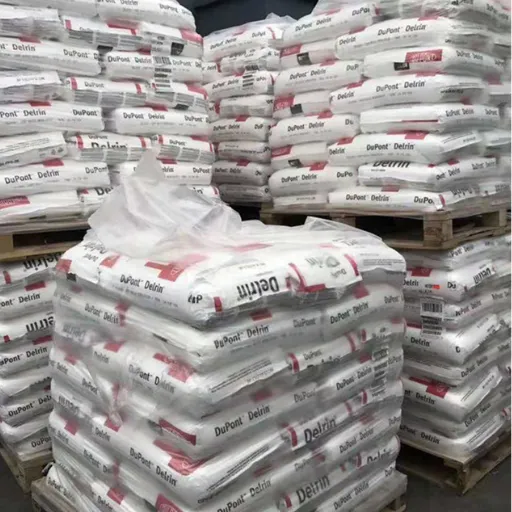
Density rarely drives material selection in isolation. Engineers balance it against mechanical strength, thermal resistance, chemical compatibility, and cost. Understanding how density correlates, or does not correlate, with these other properties helps you make smarter trade-offs.
Density and stiffness do not always move together. Glass-filled grades increase both density and stiffness. But compare unfilled PC at 1.20 g/cm3 to unfilled POM at 1.41 g/cm3. POM is denser, yet PC offers comparable flexural modulus with better impact resistance and transparency. Density alone would mislead you into thinking POM is the stiffer, stronger choice in all applications.
Density and cost per part are not the same as cost per kilogram. This is the trap Chen Wei nearly fell into at the start of this guide. A denser material at a lower price per kilogram can produce a more expensive part than a lighter material at a higher price per kilogram. Always normalize supplier quotations to cost per part or cost per unit volume before comparing materials.
| Material | Density (g/cm3) | Tensile Strength (MPa) | HDT at 1.8 MPa (°C) | Relative Cost Index |
|---|---|---|---|---|
| PP | 0.90 | 30 | 100 | Low |
| ABS | 1.05 | 45 | 95 | Low-Medium |
| PA6 | 1.13 | 80 | 65 | Medium |
| PA66 | 1.14 | 85 | 75 | Medium |
| PC | 1.20 | 65 | 130 | Medium-High |
| POM | 1.41 | 70 | 110 | Medium |
| PBT | 1.31 | 55 | 60 | Medium |
The table above illustrates why material selection is multidimensional. PP offers the lowest density and lowest cost but falls short on strength and heat resistance. PA66 delivers excellent strength-to-density ratio for structural parts.
PC dominates where transparency and high heat resistance are required, despite its moderate density. PBT trades thermal performance for excellent dimensional stability and electrical properties.
There is no universal "best" material. There is only the best material for your specific combination of functional requirements, processing constraints, and cost targets. Density is one input in that equation. Treat it as such.
For a deeper comparison of how these materials perform in automotive and electronics applications, see our automotive plastics applications and electronics grade plastics pages.
How to Use Density Data for Procurement and Costing
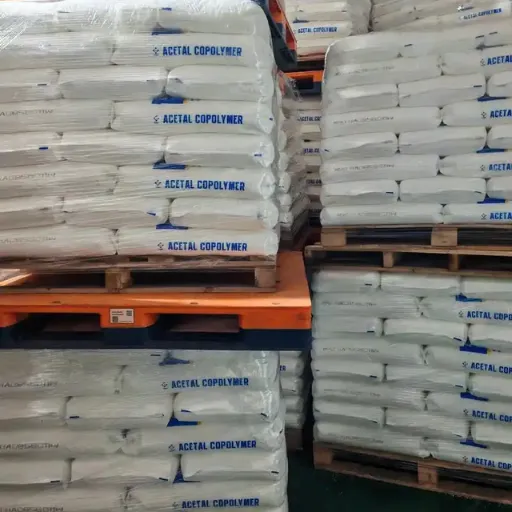
Procurement professionals can turn density data into a competitive advantage during supplier negotiations and cost modeling. Here is how to apply it systematically.
Step 1: Normalize quotations to cost per unit volume. Ask every supplier for price per kilogram and for the nominal density of the exact grade they are quoting. Divide price per kilogram by density to get cost per cubic centimeter. This removes the density distortion and lets you compare materials on an apples-to-apples basis.
Step 2: Verify density on incoming Certificates of Analysis. A supplier quoting ABS at 1.04 g/cm3 but delivering material consistently measuring 1.08 g/cm3 is either shipping a different grade or has a process control issue. Either way, your part weight and material usage calculations are wrong. Track COA density values over time and flag trends.
Step 3: Factor density into shipping and warehousing costs. A 25-metric-ton order of PBT GF30 at 1.50 g/cm3 occupies less warehouse space than 25 metric tons of PP at 0.90 g/cm3. But if you are paying for warehouse space by square meter, the denser material is more space-efficient. If you are paying freight by volumetric weight, the lighter material may ship more cheaply. Match your costing model to the actual logistics contract.
Step 4: Use density to cross-check part weight estimates. When a supplier quotes a finished part weight, you can back-calculate the expected weight from the part volume and material density. If the quoted part weight is 15% heavier than your calculation, ask why. The answer may reveal thicker walls, higher shrinkage compensation, or a different grade than specified.
In late 2024, a Dubai-based trading company sourcing appliance components from China discovered that one of their suppliers had quietly substituted a mineral-filled PP for the unfilled PP specified on the drawing. The substitution was not caught by visual inspection or by basic mechanical testing.
It was caught when the buyer weighed a sample lot and found each part was 8% heavier than the approved first-article sample. A quick density check confirmed the switch. The supplier had swapped materials to save money, betting that the buyer would not notice.
Density data exposed the substitution before the shipment left the port.
Density is a simple, inexpensive property to measure. It is also one of the hardest to fake without changing everything else about the material. Use it as a first-line quality verification tool.
Need a reliable source of consistent engineering plastics? Shanghai Wenqin Plastics maintains inventory of ABS, PC, PA6, PA66, POM, PP, PE, PBT, and PMMA grades with complete COA documentation for every lot. Request a quotation for your next project and receive detailed density and property data with your proposal.
Conclusion
Density is not a footnote on a technical data sheet. It is a strategic variable that influences part design, process parameters, shipping economics, and total cost of ownership. A well-organized plastic density chart belongs in every engineering and procurement office that works with injection-molded components.
The key takeaways from this guide are straightforward:
Density varies significantly across engineering plastics, from 0.90 g/cm3 for PP to over 1.50 g/cm3 for glass-filled PBT.
Fillers, modifiers, and moisture are the primary sources of density variation within a polymer family.
Always normalize supplier pricing to cost per part or cost per unit volume, not just cost per kilogram.
Verify density on incoming COAs as a fast, effective quality check.
Update process parameters when switching materials, because melt density affects shot size, cooling, and cycle time.
The next time you evaluate a material quotation or review a design change, pull up the density data first. It takes 30 seconds and can prevent decisions that cost weeks and thousands of dollars to undo.
At Shanghai Wenqin Plastics, we provide complete technical documentation, including certified density values, for every grade we supply. Our team is available to help you interpret material data and select the right engineering plastic for your application. Contact us today to discuss your requirements or request a sample for evaluation.
Recently Posted
-
How to Choose the Right Engineering Plastics Distributor for Your Manufacturing Supply Chain
June 12, 2026When a production line at a German automotive tier-1 supplier ground to a halt last year, the cause was not equipment failure or l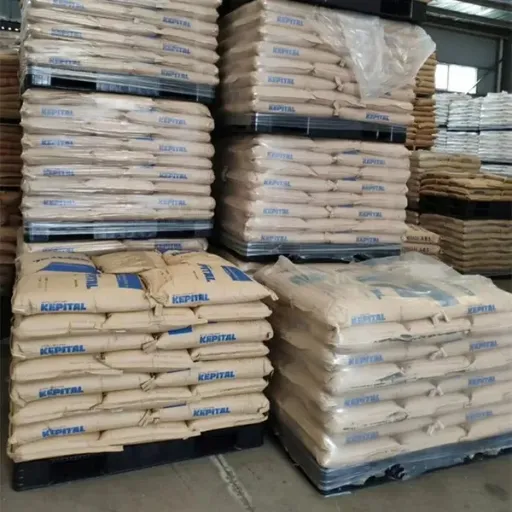 Read More
 -
The Plastic Extrusion Process: A Complete Technical Guide for Manufacturers
June 12, 2026When the quality team at a window profile plant in Poland measured wall thickness drift on their PVC line last spring, the culprit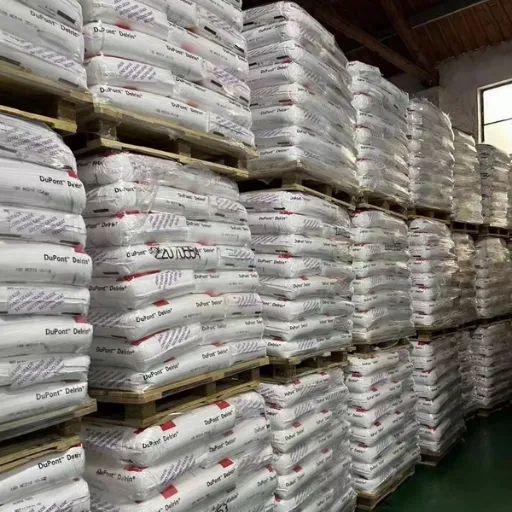 Read More
 -
How to Choose an Engineering Plastics Supplier That Protects Your Production Line
June 10, 2026Last March, a tier-2 automotive supplier in Stuttgart received a shipment of PA66 GF30 that looked identical to every batch before Read More
 -
How Long Does Plastic Last? A Materials Engineer's Guide to Polymer Lifespan
June 10, 2026A single polyethylene grocery bag can persist in a landfill for 500 years, yet the same material inside your refrigerator's in Read More

Contact Us
Recommended Products
-
 POM GF-10 Glass-Fiber Reinforced Resin Pellets for Industrial GearsNegotiableMOQ: 1 Kilogram
 -
Duracon POM SW-01 Granules - High-Performance Copolymer Resin for Industrial UseNegotiableMOQ: 1000 Kilograms
-
Basel Origin PP 4160/HP500N General Purpose Injection Molding Homopolymer Polypropylene PP PelletsNegotiableMOQ: 1000 Kilograms
-
Chimei ABS Resin D-1200 for Electronic Enclosures With Flame Retardant PropertiesNegotiableMOQ: 1 Kilogram
-
HDPE Film Grade Hta-001 Injection for High Strength ToughnessNegotiableMOQ: 1 Kilogram
-
High‑Heat‑Resistant Optical‑Grade Polycarbonate PC Resin Teijin SP‑1516 for Camera Lens ManufacturingNegotiableMOQ: 1 Kilogram
-
PC Resin Covestro 1803 With High Impact Resistance for Automotive PartsNegotiableMOQ: 25 Kilograms
-
General Purpose ABS GP-22 From Ineos Ideal for Daily Consumer Goods and Common Injection PartsNegotiableMOQ: 1 Kilogram
-
Celanese DuPont Precision XGC-25 DuPont Injection Molding Plastic Products POMNegotiableMOQ: 1 Kilogram
-
High Impact ABS Plastic Granules HI-121H Industrial Raw MaterialNegotiableMOQ: 1 Kilogram


-
Sinopec PP N-T30S Virgin Wire Drawing Grade Polypropylene GranulesNegotiableMOQ: 1 Kilogram
-
POM F10-03H With High Impact Resistance for Automotive Fuel System ComponentsNegotiableMOQ: 1 Kilogram
-
General Impact Grade ABS PA 737 Fit for Mass Production Daily Plastic and Office Supply PartsNegotiableMOQ: 1 Kilogram
-
366-5 PP Resin Granules With High Impact Strength for Industrial UseNegotiableMOQ: 1 Kilogram
-
PP Granules 3009 - Flame Retardant PP Compound for Electrical Components, UL94 V-2 RatedNegotiableMOQ: 1 Kilogram
-
PC-115P Polycarbonate Resin for 3D Printing Filaments With Low WarpageNegotiableMOQ: 1 Kilogram
-
Low‑Temperature Impact PP Pellets K4750 Modified Copolymer for Automotive BumpersNegotiableMOQ: 1 Kilogram
-
Chimei ABS Resin D-2200 for Luggage and Travel Cases With High RigidityNegotiableMOQ: 1 Kilogram
-
Natural Color Delrin POM M90NAT Celanese DuPont Virgin Resin Raw MaterialNegotiableMOQ: 1 Kilogram
-
FMA016 HDPE Grade for Large-Diameter Corrugated Pipe ProductionNegotiableMOQ: 1 Kilogram