
 Business License

HDPE Material Properties: A Technical Guide for Engineers and Procurement Professionals
A manufacturing engineer in Jiangsu province recently discovered that the chemical storage tanks his company had been producing were failing pressure tests at an unacceptable rate. The culprit was not the design or the molding process. It was the material specification. His team had specified a general-purpose polyethylene grade without fully understanding how density, melt flow index, and environmental stress crack resistance interact in real-world chemical exposure. After switching to a properly specified high-density polyethylene (HDPE) with documented environmental stress crack resistance (ESCR) values, failure rates dropped by 94%. The difference was not the supplier. It was the understanding of HDPE material properties and how they map to application demands.
If you specify, procure, or process polyethylene resins, you have faced a version of this challenge. HDPE is one of the most widely used thermoplastics globally, yet its performance varies dramatically based on molecular weight, density, and processing history. This guide provides a comprehensive technical overview of HDPE material properties, applications, and procurement considerations to support informed material decisions.
You will learn the key mechanical, thermal, and chemical properties that distinguish HDPE from other polyethylene grades, how density and melt flow index drive performance differences, which applications benefit most from HDPE selection, and what to verify when sourcing HDPE resin for your production requirements.
What Is HDPE? Defining High-Density Polyethylene
High-density polyethylene (HDPE) is a thermoplastic polymer produced from ethylene monomer via catalytic polymerization. The "high-density" designation refers to its crystalline structure. HDPE contains minimal branching compared to low-density polyethylene (LDPE) and linear low-density polyethylene (LLDPE), which allows polymer chains to pack more tightly and form higher crystallinity levels.
This structural difference directly determines HDPE material properties. HDPE typically achieves densities of 0.941-0.965 g/cm³, compared to 0.910-0.940 g/cm³ for LDPE. Higher crystallinity translates to greater stiffness, tensile strength, and chemical resistance, though at some cost to flexibility and impact resistance relative to lower-density grades.
Technical Note: HDPE density is measured per ASTM D1505 or ISO 1183. Small density variations within the HDPE range significantly affect stiffness and impact behavior. Always verify density specifications against application requirements.
HDPE is available in homopolymer and copolymer forms. Ethylene-hexene and ethylene-butene copolymers improve toughness and ESCR compared to homopolymer grades, making them suitable for demanding applications like fuel tanks and industrial containers.
Key HDPE Material Properties
Mechanical Properties
HDPE offers a distinctive balance of stiffness, strength, and toughness that makes it suitable for structural applications where lower-density polyethylenes would lack rigidity.
Tensile Strength: HDPE achieves tensile strength of 20-37 MPa depending on grade and density. Higher-density grades within the HDPE range generally deliver greater stiffness but slightly reduced elongation at break. For load-bearing applications such as industrial pallets and structural tanks, tensile strength values above 28 MPa are typically specified.
Flexural Modulus: This property distinguishes HDPE most clearly from LDPE and LLDPE. HDPE flexural modulus ranges from 0.8-1.4 GPa, providing the rigidity required for self-supporting containers, pipes, and structural profiles. LDPE, by comparison, typically achieves only 0.15-0.25 GPa.
Impact Resistance: HDPE maintains good impact strength across a broad temperature range, including sub-zero conditions. Izod impact values of 20-100 kJ/m² are typical, with copolymer grades and lower-density HDPE variants offering superior toughness. This property makes HDPE suitable for outdoor applications and products subject to rough handling.
Hardness: Shore D hardness of 60-70 makes HDPE resistant to abrasion and surface damage. This characteristic supports long service life in pipe systems, liners, and material handling equipment.
When Maria, a procurement manager at a packaging manufacturer in Turkey, evaluated HDPE grades for a new industrial container line, she initially focused solely on price per kilogram. Her team later discovered that the lower-priced grade had insufficient stiffness for stacked loading, causing deformation in warehouse storage. Switching to a higher-density HDPE with flexural modulus of 1.2 GPa solved the stacking problem and reduced warranty claims by 80%. The material cost increased by 4%, but total cost of ownership dropped significantly.
Thermal Properties
Understanding HDPE thermal behavior is essential for processing and for specifying materials that must perform across temperature extremes.
Melting Point: HDPE melts at 130-137°C, higher than LDPE (105-115°C) but lower than most engineering plastics. This moderate melting point enables energy-efficient processing while supporting service temperatures up to 120°C for short-term exposure.
Heat Deflection Temperature (HDT): At 1.8 MPa loading, HDPE HDT ranges from 60-82°C depending on grade and crystallinity. This property limits HDPE to applications where sustained loads at elevated temperatures are minimal. For hot-fill packaging or components near heat sources, HDT verification is critical.
Continuous Service Temperature: HDPE performs reliably from -50°C to 60°C under continuous load. Short-term exposure to 80°C is generally acceptable for unstressed components. Below -50°C, embrittlement becomes a concern for impact-critical applications.
Thermal Expansion: The coefficient of linear thermal expansion for HDPE is approximately 100-150 x 10⁻⁶/°C, higher than metals but typical for polyolefins. Design allowances must accommodate dimensional changes across temperature cycles, particularly in pipe systems and large molded components.
Chemical Resistance
HDPE exhibits outstanding chemical resistance, one of its primary advantages over many competing materials.
Acids and Bases: HDPE resists most acids, alkalis, and salt solutions across concentrations relevant to industrial and consumer applications. Sulfuric acid, hydrochloric acid, sodium hydroxide, and bleach solutions have minimal effect at ambient temperatures. This resistance explains HDPE dominance in chemical storage, laboratory ware, and agricultural chemical containers.
Organic Solvents: Resistance to organic solvents is more nuanced. HDPE resists alcohols, glycols, and many hydrocarbons at ambient temperature. However, aromatic hydrocarbons (benzene, toluene), chlorinated solvents, and some ketones can cause swelling or environmental stress cracking under load.
Environmental Stress Crack Resistance (ESCR): ESCR measures a material's ability to resist cracking under mechanical stress in the presence of surface-active agents or certain chemicals. This property varies enormously among HDPE grades and is often the determining factor in container and pipe applications. ESCR is typically measured per ASTM D1693 or ISO 4599, with values ranging from a few hours for low-ESCR grades to thousands of hours for premium copolymer formulations.
Technical Note: Always specify ESCR requirements when HDPE will contact detergents, surfactants, or organic chemicals under stress. General-purpose HDPE grades can fail catastrophically in these environments despite excellent performance in unstressed chemical exposure tests.
How Density and Melt Flow Index Shape HDPE Performance
Two parameters dominate HDPE grade selection: density and melt flow index (MFI). Understanding their interaction enables precise material specification.
Density Effects
Within the HDPE range (0.941-0.965 g/cm³), small density differences produce meaningful property variations:
| Density Range | Stiffness | Impact Resistance | ESCR | Typical Applications |
|---|---|---|---|---|
| 0.941-0.945 | Moderate | Higher | Better | Films, blow-molded containers, caps |
| 0.946-0.955 | Good | Balanced | Moderate | General injection molding, pipes, sheets |
| 0.956-0.965 | High | Lower | Lower | Rigid profiles, structural parts, crates |
Higher density increases crystallinity, which improves stiffness, tensile strength, and chemical resistance at the cost of toughness and ESCR. The optimal density depends on whether the application prioritizes rigidity or durability.
Melt Flow Index (MFI) Effects
MFI measures how easily HDPE flows when melted, reported in g/10min at 190°C under 2.16 kg load per ASTM D1238.
Low MFI (0.2-1.0 g/10min): Higher molecular weight, better mechanical properties and ESCR, more difficult processing. Used for blow-molded containers, pipes, and large parts requiring strength.
Medium MFI (2-10 g/10min): Balanced properties and processability. The workhorse range for injection molding, extrusion, and general-purpose applications.
High MFI (20+ g/10min): Lower molecular weight, easier flow, reduced mechanical properties. Used for thin-wall injection molding, complex geometries, and applications where processability outweighs strength requirements.
The interaction between density and MFI creates the HDPE grade matrix. A high-density, low-MFI grade delivers maximum stiffness and strength for pipes and structural profiles. A medium-density, medium-MFI grade offers balanced properties for general injection molding. A lower-density, high-MFI grade prioritizes flow and toughness for thin-wall packaging.
HDPE Applications Across Industries
HDPE material properties make it suitable for diverse applications spanning packaging, infrastructure, agriculture, and industrial manufacturing.
Blow-Molded Containers and Bottles
HDPE dominates the bottle and container market, from milk jugs and detergent bottles to industrial drums and chemical storage tanks. Blow molding grades typically feature medium density (0.950-0.955 g/cm³) and low-to-medium MFI (0.3-8 g/10min) to balance parison stability, wall thickness control, and mechanical performance.
For chemical and industrial containers, ESCR becomes the critical specification. Premium grades achieve ESCR values exceeding 1,000 hours, preventing catastrophic failure when containers hold surfactants, oils, or agricultural chemicals.
Pipe Systems
HDPE pipe grades represent one of the largest volume segments. Pipe-grade HDPE (PE80, PE100 classifications per ISO standards) offers exceptional slow crack growth resistance, long-term hydrostatic strength, and flexibility. These properties support buried water distribution, gas distribution, and drainage systems with design lives exceeding 50 years.
PE100 grade HDPE delivers minimum required strength (MRS) of 10 MPa at 20°C for 50 years, enabling thinner pipe walls and higher pressure ratings than PE80. The material's flexibility simplifies installation and resists ground movement better than rigid pipe materials.
Injection-Molded Industrial Components
HDPE injection molding grades produce crates, pallets, tote boxes, and material handling equipment. These applications demand stiffness for load-bearing performance, impact resistance for durability, and UV stability for outdoor service.
Want to explore HDPE grades suitable for your injection molding requirements? Browse our PE resin portfolio to view available densities, MFI ranges, and application-specific formulations.
Films and Sheets
While LLDPE dominates general film applications, HDPE film grades serve specific needs: grocery bags requiring stiffness and tactile feel, liner films needing chemical resistance, and geomembranes for environmental containment. HDPE film offers higher tensile strength and lower permeability than LDPE alternatives.
Extruded Profiles and Sheets
HDPE extrusion produces geomembranes, pond liners, cutting boards, and tank linings. The material's chemical resistance and weldability make it ideal for fabricated tanks and containment systems assembled from extruded sheet.
HDPE Processing Guidelines
Successful HDPE processing requires attention to drying, temperature control, and equipment considerations.
Drying Requirements
HDPE is not highly hygroscopic compared to nylons or polyesters, but moisture can affect surface quality in demanding applications. For general injection molding and extrusion, drying is often unnecessary if material is stored properly. For blow molding and applications requiring optimal surface appearance, drying at 60-70°C for 1-2 hours removes surface moisture.
Melt Temperature
Recommended range: 180-260°C
Typical settings: 200-240°C for injection molding; 180-220°C for extrusion
Upper limit: Exceeding 280°C risks thermal degradation, visible as discoloration, odor, and reduced mechanical properties
Higher melt temperatures improve surface gloss and weld line strength but extend cooling time. Lower temperatures reduce cycle time but may produce flow lines or incomplete filling in thin sections.
Mold Temperature
Injection molding: 20-60°C
Blow molding: 10-40°C
Extrusion: Die temperatures typically 180-220°C
Higher mold temperatures improve surface appearance and reduce residual stress but extend cycle times. For maximum productivity, mold temperatures at the lower end of the range are preferred.
Injection Molding Parameters
Injection pressure: 50-100 MPa typical; higher pressures needed for thin walls
Screw speed: Moderate speeds prevent shear heating; 50-100 rpm typical
Back pressure: 5-15 MPa for consistent melting and color dispersion
Shrinkage: 1.5-3.5% depending on density, MFI, and processing conditions
Extrusion and Blow Molding
HDPE extrudes readily with standard polyolefin screws (L/D ratio 24:1 to 30:1, compression ratio 3:1 to 4:1). For blow molding, parison programming and die design control wall thickness distribution. For pipe extrusion, cooling calibration is critical to achieve dimensional tolerance and optimize crystallinity for long-term strength.
HDPE vs. Other Polyethylene Grades
HDPE vs. LDPE
LDPE offers greater flexibility, clarity, and impact resistance but lacks HDPE's stiffness and tensile strength. Choose HDPE when rigidity, chemical resistance, or higher service temperatures matter. Choose LDPE for flexible films, squeeze bottles, and applications requiring stress-crack resistance in flexible form.
HDPE vs. LLDPE
LLDPE bridges the gap between LDPE and HDPE, offering better toughness than LDPE and better processability than HDPE. LLDPE often replaces LDPE in film applications. HDPE remains preferred when stiffness and higher temperature performance are required.
HDPE vs. PP (Polypropylene)
PP and HDPE compete in several application areas including containers, caps, and household products. PP offers higher stiffness, better heat resistance (HDT ~100°C vs. ~75°C for HDPE), and lower density (0.90 g/cm³ vs. 0.95 g/cm³). HDPE provides superior low-temperature toughness and better chemical resistance to certain solvents. For a detailed comparison of these materials in injection molding applications, see our guide to selecting PP and PE grades.
Sourcing HDPE Resin: Quality and Specification Considerations
When procuring HDPE resin, several factors beyond unit price determine total cost of ownership and production reliability.
Specification Verification
Request a Technical Data Sheet (TDS) documenting:
Density and MFI values with test methods
Mechanical properties (tensile strength, flexural modulus, impact strength)
Thermal properties (melting point, HDT, Vicat softening temperature)
ESCR values for container and pipe applications
Regulatory compliance status (RoHS, REACH, FDA where applicable)
For critical applications, verify that supplier TDS values align with your incoming inspection capabilities. If you test MFI internally, confirm that your test method matches the supplier's declared method.
Batch Consistency
HDPE performance depends on molecular weight distribution and additive packages that vary between production lots. Reputable suppliers provide certificates of analysis (COA) documenting batch test results for key properties. Lot-to-lot MFI variation should typically remain within ±10% of nominal value for consistent processing.
After experiencing three months of intermittent quality issues with HDPE pipe-grade resin, a procurement director in the Middle East implemented incoming MFI testing on every batch. The testing revealed that one supplier's lots varied by up to 25% from nominal MFI, causing extrusion line instability. Switching to a supplier with documented batch testing and tighter process control eliminated the problem and reduced scrap by 12%.
Color and Additive Options
HDPE is available in natural (translucent white), black (with carbon black UV stabilizer), and custom colors. Black HDPE with 2-3% carbon black content provides excellent UV stability for outdoor applications. Custom colors require confirmation of pigment compatibility and regulatory compliance for the target application.
Need help specifying the right HDPE grade for your application? Contact our technical team for material selection guidance based on your processing method and end-use requirements.
Packaging and Handling
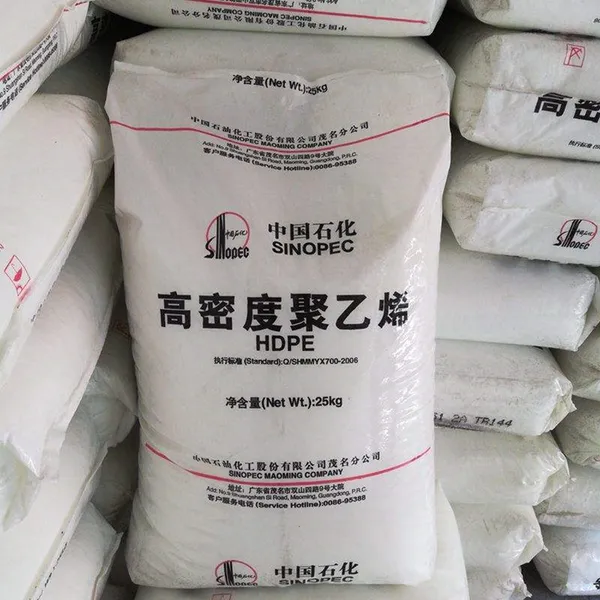
HDPE pellets should arrive in moisture-barrier packaging (typically 25 kg bags or bulk containers) to prevent contamination and moisture absorption. For export shipments, verify that packaging meets international shipping requirements and includes proper labeling with grade identification, batch number, and handling instructions.
Regulatory and Compliance Considerations

Food Contact
Many HDPE grades comply with FDA regulations for food contact applications (21 CFR 177.1520). Verify compliance status with your supplier and confirm that additives and colorants meet relevant food-contact requirements. For European markets, Regulation (EC) No 1935/2004 applies.
Potable Water
HDPE pipe grades for drinking water must meet national certifications such as NSF/ANSI 61 in North America or WRAS approval in the UK. These certifications verify that the material does not leach harmful substances into water at regulated levels.
Environmental Compliance
Standard HDPE formulations are generally RoHS- and REACH-compliant. For applications requiring specific certifications, request compliance documentation from your supplier before placing orders.
Common HDPE Selection Mistakes to Avoid
Specifying density without considering MFI: A high-density grade with very low MFI may deliver excellent stiffness but prove impossible to process in thin-wall injection molding. Match both parameters to the application and processing method.
Ignoring ESCR in chemical contact applications: General-purpose HDPE can fail prematurely when stressed in contact with surfactants or organic chemicals. Always specify ESCR requirements for containers, pipe fittings, and stressed components.
Overlooking UV stability for outdoor use: Unstabilized HDPE degrades in sunlight within months. Specify carbon black or UV stabilizer packages for outdoor applications.
Neglecting thermal expansion in design: HDPE's high coefficient of thermal expansion requires design allowances, particularly for pipe systems and large molded parts subject to temperature cycling.
Conclusion
HDPE material properties offer engineers and procurement professionals a versatile combination of stiffness, chemical resistance, processability, and cost-effectiveness. From blow-molded chemical containers to buried pipe systems and injection-molded industrial components, HDPE serves applications where few alternative materials can match its performance balance.
Key takeaways for HDPE specification include:
Density and MFI are the primary grade selection parameters; match them precisely to application requirements
ESCR is critical for containers and stressed components in chemical contact; never assume all HDPE grades perform equally
Higher-density grades deliver stiffness but sacrifice some toughness and ESCR
Proper UV stabilization is essential for outdoor service life
Batch consistency and complete documentation support reliable production
The difference between satisfactory and exceptional HDPE performance often lies in grade selection detail rather than material category choice. Working with a supplier who provides comprehensive technical data, batch consistency, and application guidance reduces specification risk and supports long-term production stability.
At Shanghai Wenqin Plastics, we supply HDPE and other polyethylene grades for injection molding, blow molding, extrusion, and film applications worldwide. Our technical team provides material selection support, processing guidance, and complete documentation including TDS, MSDS/SDS, and compliance certificates. Request a quotation or contact our team to discuss your HDPE material requirements.
Recently Posted
-
How to Choose the Right Engineering Plastics Distributor for Your Manufacturing Supply Chain
June 12, 2026When a production line at a German automotive tier-1 supplier ground to a halt last year, the cause was not equipment failure or l Read More
 -
The Plastic Extrusion Process: A Complete Technical Guide for Manufacturers
June 12, 2026When the quality team at a window profile plant in Poland measured wall thickness drift on their PVC line last spring, the culprit Read More
 -
How to Choose an Engineering Plastics Supplier That Protects Your Production Line
June 10, 2026Last March, a tier-2 automotive supplier in Stuttgart received a shipment of PA66 GF30 that looked identical to every batch before Read More
 -
How Long Does Plastic Last? A Materials Engineer's Guide to Polymer Lifespan
June 10, 2026A single polyethylene grocery bag can persist in a landfill for 500 years, yet the same material inside your refrigerator's in Read More

Contact Us
Recommended Products
-
 POM GF-10 Glass-Fiber Reinforced Resin Pellets for Industrial GearsNegotiableMOQ: 1 Kilogram
 -
Duracon POM SW-01 Granules - High-Performance Copolymer Resin for Industrial UseNegotiableMOQ: 1000 Kilograms
-
Basel Origin PP 4160/HP500N General Purpose Injection Molding Homopolymer Polypropylene PP PelletsNegotiableMOQ: 1000 Kilograms
-
Chimei ABS Resin D-1200 for Electronic Enclosures With Flame Retardant PropertiesNegotiableMOQ: 1 Kilogram
-
HDPE Film Grade Hta-001 Injection for High Strength ToughnessNegotiableMOQ: 1 Kilogram
-
High‑Heat‑Resistant Optical‑Grade Polycarbonate PC Resin Teijin SP‑1516 for Camera Lens ManufacturingNegotiableMOQ: 1 Kilogram
-
PC Resin Covestro 1803 With High Impact Resistance for Automotive PartsNegotiableMOQ: 25 Kilograms
-
General Purpose ABS GP-22 From Ineos Ideal for Daily Consumer Goods and Common Injection PartsNegotiableMOQ: 1 Kilogram
-
Celanese DuPont Precision XGC-25 DuPont Injection Molding Plastic Products POMNegotiableMOQ: 1 Kilogram
-
High Impact ABS Plastic Granules HI-121H Industrial Raw MaterialNegotiableMOQ: 1 Kilogram

-
Sinopec PP N-T30S Virgin Wire Drawing Grade Polypropylene GranulesNegotiableMOQ: 1 Kilogram
-
POM F10-03H With High Impact Resistance for Automotive Fuel System ComponentsNegotiableMOQ: 1 Kilogram
-
General Impact Grade ABS PA 737 Fit for Mass Production Daily Plastic and Office Supply PartsNegotiableMOQ: 1 Kilogram
-
366-5 PP Resin Granules With High Impact Strength for Industrial UseNegotiableMOQ: 1 Kilogram
-
PP Granules 3009 - Flame Retardant PP Compound for Electrical Components, UL94 V-2 RatedNegotiableMOQ: 1 Kilogram
-
PC-115P Polycarbonate Resin for 3D Printing Filaments With Low WarpageNegotiableMOQ: 1 Kilogram
-
Low‑Temperature Impact PP Pellets K4750 Modified Copolymer for Automotive BumpersNegotiableMOQ: 1 Kilogram
-
Chimei ABS Resin D-2200 for Luggage and Travel Cases With High RigidityNegotiableMOQ: 1 Kilogram
-
Natural Color Delrin POM M90NAT Celanese DuPont Virgin Resin Raw MaterialNegotiableMOQ: 1 Kilogram
-
FMA016 HDPE Grade for Large-Diameter Corrugated Pipe ProductionNegotiableMOQ: 1 Kilogram