
 Business License

How Long Does Plastic Last? A Materials Engineer's Guide to Polymer Lifespan
A single polyethylene grocery bag can persist in a landfill for 500 years, yet the same material inside your refrigerator's insulation might start cracking after just five years of thermal cycling. If you have ever stood in front of a material data sheet wondering whether a 20-year product warranty is realistic, you already know the uncomfortable truth: the question is not how long plastic lasts, but which plastic, under what conditions, and for what application.
You need reliable numbers to make sourcing decisions. Your customers expect durability data. Your engineering team wants to know when a material will transition from performing perfectly to failing catastrophically. In this guide, you will learn the actual degradation timelines for common polymers, the four environmental factors that accelerate aging, and how engineering-grade materials deliver predictable service lives that commodity plastics simply cannot match. We will also show you how to translate laboratory accelerated-aging data into real-world specifications your procurement team can act on.
The Real Answer: Plastic Lifespan Varies from Decades to Centuries
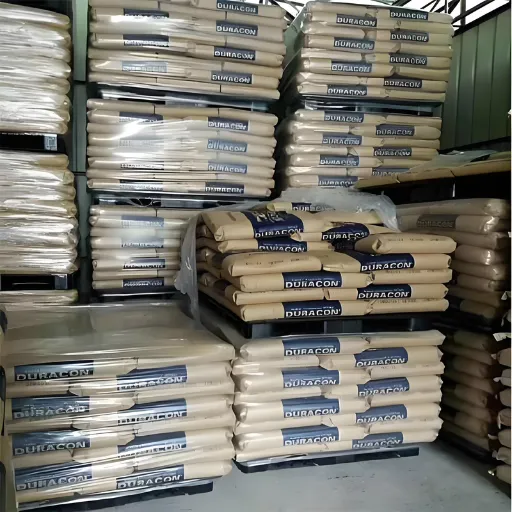
Most procurement managers want a single number. The reality is more complex. A thermoplastic material can last anywhere from 2 years to 1,000 years depending on its polymer chemistry, formulation, and operating environment.
Consider the difference between a disposable polystyrene cup and a polyether ether ketone (PEEK) bearing in an aerospace application. The cup begins to embrittle within months of UV exposure. The PEEK component, by contrast, often carries a certified 15-year service life at 250°C with maintained mechanical properties.
Want to see how engineering-grade materials outperform standard polymers in demanding environments? Explore our engineering plastic materials and technical specifications →
When Marcus, a procurement director at a German automotive supplier, first reviewed his company's warranty data in 2023, he noticed a pattern. Interior trim components specified in standard ABS were generating failure reports at year six, right after the powertrain warranty expired but before the corrosion warranty ended. His team switched to a UV-stabilized, heat-resistant ABS/PC blend for the next platform. Two years into production, early warranty indicators showed a 40% reduction in trim-related claims. The material cost 18% more per kilogram. The avoided warranty costs paid for the upgrade by month fourteen.
The takeaway is not that plastic is either durable or disposable. The takeaway is that matching the polymer to the application timeline creates measurable business value.
Understanding Plastic Degradation: The Science Behind Polymer Breakdown
Plastic does not biodegrade in the traditional sense. Instead, it undergoes progressive chemical and physical degradation through four primary mechanisms.
Thermal Degradation
Heat provides the activation energy for polymer chain scission. Every thermoplastic has a continuous service temperature limit. Exceed that limit, and the long molecular chains that give the material its strength begin breaking into shorter, weaker segments. For polypropylene, the ceiling is roughly 100°C for continuous use. For PEEK, it is 250°C. The gap between those numbers explains why material selection matters so much in under-hood automotive and industrial applications.
Photo-Oxidative Degradation
Ultraviolet radiation from sunlight triggers free-radical reactions in polymer chains. The effect is most severe in unprotected polyolefins like polyethylene and polypropylene, where UV exposure can reduce impact strength by 50% within 12 to 24 months. Carbon black loading, hindered amine light stabilizers (HALS), and UV absorbers can extend outdoor service life by a factor of five or more.
Hydrolytic Degradation
Water molecules attack ester and amide linkages in condensation polymers. Polyesters like PET and polyamides like nylon 6/6 are particularly susceptible in hot, humid environments. At 80°C and 85% relative humidity, unfilled nylon 6/6 can lose 30% of its tensile strength within 2,000 hours.
Mechanical Fatigue and Creep
Even below the failure threshold, cyclic loading causes microscopic cracks to initiate and propagate. Creep, the gradual deformation under sustained load, is especially problematic in semi-crystalline polymers like polyethylene. A HDPE pipe carrying water at constant pressure might meet its 50-year design life, but the same pipe subjected to pressure cycling might fail in 15 years.
How Long Do Different Types of Plastic Last?
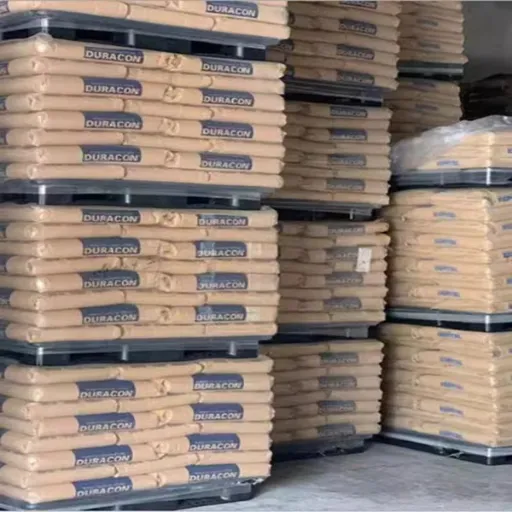
The following timelines represent typical service lives under moderate indoor conditions unless otherwise noted. Outdoor exposure, elevated temperature, or chemical contact will reduce these values substantially.
| Polymer | Typical Indoor Lifespan | Outdoor Lifespan (Unstabilized) | Outdoor Lifespan (UV-Stabilized) | Key Degradation Mode |
|---|---|---|---|---|
| Polyethylene (PE) | 20–1,000 years | 2–5 years | 10–20 years | Photo-oxidation, thermal oxidation |
| Polypropylene (PP) | 20–500 years | 1–3 years | 5–10 years | Photo-oxidation, thermal degradation |
| Polyvinyl Chloride (PVC) | 50–100+ years | 10–20 years | 30–50+ years | Dehydrochlorination, plasticizer migration |
| Polystyrene (PS) | 50–200 years | 1–2 years | 3–5 years | UV embrittlement, thermal degradation |
| Polyethylene Terephthalate (PET) | 50–500 years | 2–5 years | 5–10 years | Hydrolysis, photo-oxidation |
| Acrylonitrile Butadiene Styrene (ABS) | 30–50 years | 3–5 years | 10–15 years | UV surface degradation, thermal aging |
| Polyamide / Nylon 6/6 (PA66) | 30–50 years | 2–4 years | 8–12 years | Hydrolysis, UV degradation |
| Polycarbonate (PC) | 50–100+ years | 5–10 years | 15–25+ years | UV-induced yellowing, hydrolysis |
| Polyoxymethylene / Acetal (POM) | 20–30 years | 2–3 years | 5–8 years | Thermal depolymerization, oxidation |
| Polyether Ether Ketone (PEEK) | 50–100+ years | 15–25 years | 25–40+ years | Minimal degradation at elevated temps |
These figures come from accelerated aging studies, landfill archaeology research, and field performance data. For a deeper technical comparison of specific polymer families, see our guide to types of plastic materials.
The numbers in the left column represent persistence in low-stress, protected environments. The numbers in the right columns represent functional performance in structural or aesthetic applications. A polyethylene film buried in an anaerobic landfill might still be identifiable in 500 years. That same film holding a pallet load in a sunny warehouse loses 80% of its tensile strength in three years if it is not UV-stabilized.
Four Critical Factors That Determine Plastic Durability
The data sheet tells you what the material can do in ideal conditions. Your application determines what it actually faces. Four variables dominate real-world polymer lifespan.
Temperature and Thermal History
Every 10°C increase above the glass transition temperature roughly doubles the rate of thermal oxidation for many polymers. This Arrhenius relationship means that a component operating at 80°C ages sixteen times faster than the same component at 40°C. When reviewing materials for under-hood or industrial equipment applications, always request long-term thermal aging data at your maximum operating temperature, not just the standard 23°C data.
UV and Weather Exposure
Solar radiation below 400 nanometers breaks chemical bonds directly. The damage is surface-near but cumulative. A component that looks fine after one summer might be deeply embrittled after three. Geographic location matters significantly. A product installed in Arizona receives roughly 50% more annual UV dose than the same product in Northern Europe. If your products ship globally, specify materials tested to ISO 4892 or ASTM G154 standards with xenon-arc exposure representative of your worst-case market.
Chemical and Environmental Stress
Oils, greases, solvents, and even atmospheric pollutants accelerate degradation. Automotive under-hood applications face a particularly aggressive cocktail: hot motor oil, road salt, ozone, and acidic condensation. Nylon 6/6 absorbs moisture from humid air, which plasticizes the material and improves toughness but reduces stiffness and dimensional stability. Specifying a moisture-conditioned grade with appropriate tolerance ranges prevents field failures.
Load and Mechanical Stress
Static load causes creep. Dynamic load causes fatigue. The combination of mechanical stress with any chemical environment creates stress cracking, the most insidious failure mode in plastics. A polyethylene chemical tank might have infinite life when empty and fail in months when filled with a surfactant solution under hoop stress. Always evaluate chemical resistance under loaded conditions, not just in unloaded immersion tests.
Engineering Plastics vs. Commodity Plastics: A Durability Comparison
The distinction between commodity and engineering plastics is not just about price. It is about predictable performance over defined time horizons.
Commodity plastics like polyethylene, polypropylene, and polystyrene are engineered for low cost and processability. They perform adequately in undemanding environments. Their long-term behavior is less predictable because their formulations tolerate wider variation, and their stabilization packages are minimal.
Engineering plastics like PEEK, polycarbonate, POM, and reinforced nylons are formulated to maintain specific mechanical properties over defined service intervals. A 30% glass-filled nylon 6/6 does not just have higher initial strength than unfilled grades. It has lower moisture absorption, better creep resistance, and more predictable dimensional stability over ten-year horizons.
In 2022, the engineering team at a medical device manufacturer in Switzerland faced a critical decision. Their polypropylene surgical instruments sterilized by autoclave were showing deformation after 200 cycles, well below the required 500-cycle minimum. They evaluated switching to PPSU and PEEK. PEEK delivered the required dimensional stability and passed biocompatibility testing, but the raw material cost was eight times higher than polypropylene. The team ran a total cost of ownership model. Factoring in reduced replacement rates, lower sterilization validation costs, and decreased risk of surgical delays, the PEEK specification became the lower-cost option over a five-year instrument life. The product launched in 2024 and has logged zero material-related returns.
Need help selecting the right material for your application's service life requirements? Contact our technical team for material specification support →
How to Specify Plastic Materials for Maximum Service Life
Translating laboratory data into procurement specifications requires a structured approach. Follow this framework when working with your materials supplier.
Step 1: Define the Failure Mode
Specify what constitutes failure. Is it 50% loss of tensile strength? Surface cracking visible to the customer? A specific shift in dimensional tolerance? Different applications have different thresholds. A underground pipe might tolerate substantial strength loss before functional failure. A snap-fit housing might fail when the first crack appears.
Step 2: Map the Environmental Profile
Document the full range of temperatures, chemicals, UV exposure, and mechanical loads your component will see. Include worst-case scenarios and transient conditions. A component that normally operates at 60°C but sees 120°C during thermal sterilization must be validated at the peak, not the average.
Step 3: Demand Accelerated Aging Data
Request long-term property retention curves from your supplier. Reputable engineering plastic suppliers can provide Arrhenius plots showing strength retention versus time at multiple temperatures. Verify that the data includes the specific property you care about. Tensile strength retention does not always correlate with impact strength retention.
Step 4: Build in Safety Factors
Apply an appropriate safety factor to the predicted life. For non-critical consumer applications, a factor of 1.5 is common. For automotive safety components or medical devices, factors of 3 to 5 are standard. The cost of over-engineering is usually lower than the cost of a field failure.
Step 5: Validate with Real-World Testing
Accelerated aging predicts performance but does not replace it. Run real-time aging studies on finished components wherever possible. If your product life is ten years, begin a natural aging cohort at product development and compare its performance to accelerated predictions at years one, three, and five.
For a practical framework on matching materials to application requirements, see our material selection guide.
When Plastic Longevity Becomes a Liability: Sustainability Considerations
Durability is not always an advantage. The same persistence that makes PEEK invaluable in aircraft engines makes conventional polyethylene problematic as single-use packaging. As a materials professional, you should consider the full lifecycle of the products you specify.
Design for recyclability where the application permits. Use single-polymer constructions rather than multimaterial laminates when possible. Specify recycled content grades for non-structural applications. Many engineering plastics now offer recycled or bio-based variants with retained performance certificates.
Shanghai Wenqin Plastics supports closed-loop manufacturing partnerships. We can formulate custom compounds with post-industrial recyclate, design for disassembly, and provide material passports documenting polymer content for end-of-life sorting. If sustainability targets are part of your procurement mandate, build those requirements into the specification from the start rather than treating them as an afterthought.
Conclusion: Match the Material to the Mission
So how long does plastic last? In a protected archive, it might outlast your company. In a stressed industrial application, it might need replacement in five years. The job of a materials engineer or procurement manager is not to find the plastic that lasts the longest, but to find the plastic that lasts exactly as long as it needs to, performing predictably every day of its service life.
Key takeaways to apply to your next specification:
Polymer chemistry determines the ceiling. PEEK and PPSU offer decades of predictable performance. Polyethylene and polypropylene require stabilization and careful environmental controls.
Environment trumps chemistry. A well-stabilized polypropylene can outlast an unprotected polycarbonate in direct sunlight.
Engineering plastics deliver predictability. The premium you pay for engineering grades buys you data, consistency, and verified long-term performance.
Specify failure modes explicitly. Define what failure means for your application and demand property retention curves from your supplier.
Test under real conditions. Accelerated aging is a forecast, not a guarantee. Validate with natural aging wherever timelines permit.
Start Your Material Specification Review →
Get a complimentary technical consultation to review your current material specifications against your application's real-world service life requirements. Our engineering team will analyze your environmental profile, mechanical loads, and regulatory constraints to recommend the optimal polymer grade, filler system, and stabilization package for your next project.
Recently Posted
-
How to Choose the Right Engineering Plastics Distributor for Your Manufacturing Supply Chain
June 12, 2026When a production line at a German automotive tier-1 supplier ground to a halt last year, the cause was not equipment failure or l Read More
 -
The Plastic Extrusion Process: A Complete Technical Guide for Manufacturers
June 12, 2026When the quality team at a window profile plant in Poland measured wall thickness drift on their PVC line last spring, the culprit Read More
 -
How to Choose an Engineering Plastics Supplier That Protects Your Production Line
June 10, 2026Last March, a tier-2 automotive supplier in Stuttgart received a shipment of PA66 GF30 that looked identical to every batch before Read More
 -
How to Identify Plastic Type: A Practical Guide for Materials Engineers and Procurement Managers
June 10, 2026A shipment arrives at your receiving dock. The labels are damaged, the certificates of analysis are missing, and your production l Read More

Contact Us
Recommended Products
-
 POM GF-10 Glass-Fiber Reinforced Resin Pellets for Industrial GearsNegotiableMOQ: 1 Kilogram
 -
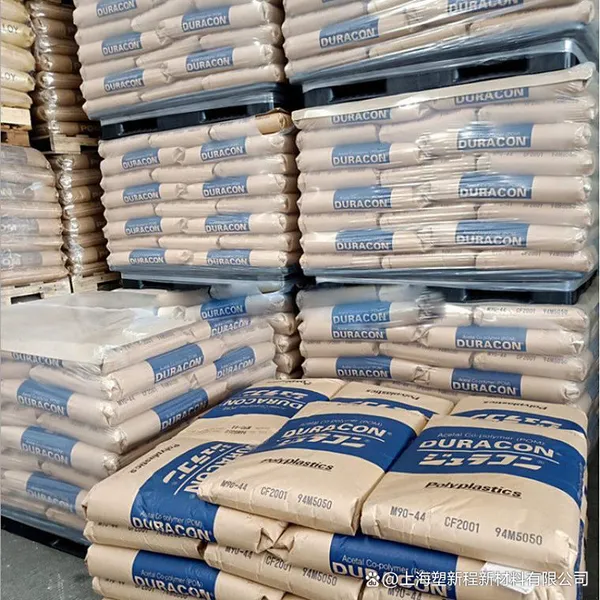
Duracon POM SW-01 Granules - High-Performance Copolymer Resin for Industrial UseNegotiableMOQ: 1000 Kilograms
-
Basel Origin PP 4160/HP500N General Purpose Injection Molding Homopolymer Polypropylene PP PelletsNegotiableMOQ: 1000 Kilograms
-
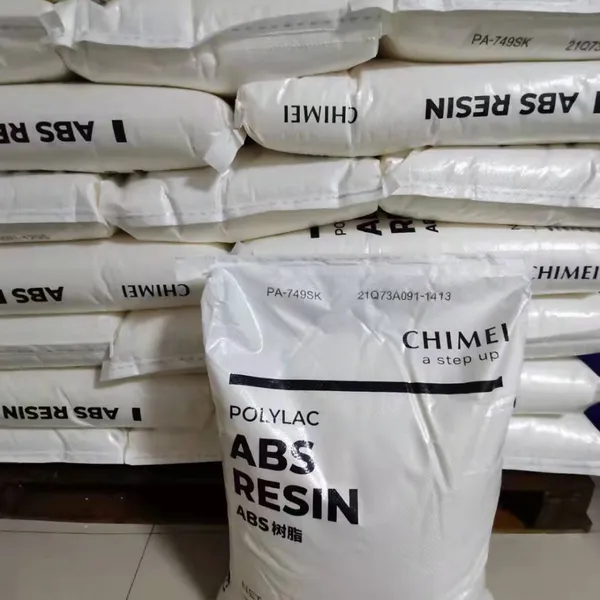
Chimei ABS Resin D-1200 for Electronic Enclosures With Flame Retardant PropertiesNegotiableMOQ: 1 Kilogram
-
HDPE Film Grade Hta-001 Injection for High Strength ToughnessNegotiableMOQ: 1 Kilogram
-
High‑Heat‑Resistant Optical‑Grade Polycarbonate PC Resin Teijin SP‑1516 for Camera Lens ManufacturingNegotiableMOQ: 1 Kilogram
-
PC Resin Covestro 1803 With High Impact Resistance for Automotive PartsNegotiableMOQ: 25 Kilograms
-
General Purpose ABS GP-22 From Ineos Ideal for Daily Consumer Goods and Common Injection PartsNegotiableMOQ: 1 Kilogram
-
Celanese DuPont Precision XGC-25 DuPont Injection Molding Plastic Products POMNegotiableMOQ: 1 Kilogram
-
High Impact ABS Plastic Granules HI-121H Industrial Raw MaterialNegotiableMOQ: 1 Kilogram

-
Sinopec PP N-T30S Virgin Wire Drawing Grade Polypropylene GranulesNegotiableMOQ: 1 Kilogram
-
POM F10-03H With High Impact Resistance for Automotive Fuel System ComponentsNegotiableMOQ: 1 Kilogram
-
General Impact Grade ABS PA 737 Fit for Mass Production Daily Plastic and Office Supply PartsNegotiableMOQ: 1 Kilogram
-
366-5 PP Resin Granules With High Impact Strength for Industrial UseNegotiableMOQ: 1 Kilogram
-
PP Granules 3009 - Flame Retardant PP Compound for Electrical Components, UL94 V-2 RatedNegotiableMOQ: 1 Kilogram
-
PC-115P Polycarbonate Resin for 3D Printing Filaments With Low WarpageNegotiableMOQ: 1 Kilogram
-
Low‑Temperature Impact PP Pellets K4750 Modified Copolymer for Automotive BumpersNegotiableMOQ: 1 Kilogram
-
Chimei ABS Resin D-2200 for Luggage and Travel Cases With High RigidityNegotiableMOQ: 1 Kilogram
-
Natural Color Delrin POM M90NAT Celanese DuPont Virgin Resin Raw MaterialNegotiableMOQ: 1 Kilogram
-
FMA016 HDPE Grade for Large-Diameter Corrugated Pipe ProductionNegotiableMOQ: 1 Kilogram