
 Business License

Strongest Plastic Material: A Guide to High-Strength Engineering Plastics
In March 2024, a structural engineer in Bangalore specified unfilled polycarbonate for a load-bearing industrial guard. The material failed under impact during installation. A forklift clipped the housing at 8 km/h. The PC cracked through a bolt hole and sent shards across the factory floor.
The problem was not that polycarbonate is weak. It is not.
The problem was that "strongest plastic material" means different things to different applications. PC excels at absorbing impact energy. It performs poorly under concentrated loads at bolted joints. The engineer needed a material with higher stiffness and creep resistance, not higher impact strength.
This confusion is common. Procurement teams ask for the strongest plastic material available. Design engineers compare datasheets looking for the highest tensile strength value.
Molding technicians worry about whether the grade will fill thin-wall sections without degrading. Each stakeholder defines strength differently.
This guide clarifies what "strong" means in plastics engineering. You will learn how polycarbonate, PA66 GF30, POM, PBT, and modified compounds compare across tensile strength, impact resistance, stiffness, and fatigue performance. You will also understand why the strongest plastic material for your application may not be the one with the highest headline number on a datasheet.
Technical Note: Tensile strength measures resistance to pulling forces. Impact strength measures resistance to sudden shock. Stiffness (flexural modulus) measures resistance to bending.
A material can be strong in one mode and weak in another. Always match the property to the stress mode.
Defining Strength in Engineering Plastics
Strength is not a single property. It is a family of mechanical behaviors that describe how a material responds to different types of stress. Selecting the strongest plastic material requires matching the right strength metric to the actual loads your component will see.
Tensile Strength is the maximum stress a material can withstand while being stretched before breaking. It matters for structural members, press-fit assemblies, and any component loaded in tension.
PA66 GF30 achieves tensile strengths of 180-200 MPa. Unfilled PC delivers 60-70 MPa. The glass-filled nylon is clearly stronger in pure tension.
Impact Strength measures energy absorption during sudden loading. A material with lower tensile strength can outperform a stronger material in impact if it deforms plastically rather than fracturing. PC achieves Izod impact values of 60-80 kJ/m² unfilled. PA66 GF30, despite its higher tensile strength, achieves only 10-15 kJ/m² because the glass fibers create stress concentration points.
Stiffness (Flexural Modulus) describes resistance to bending deformation. A stiff material deflects less under load.
POM homopolymer delivers flexural modulus around 2,800 MPa. PA66 GF30 exceeds 9,000 MPa. For structural frames and supports where deflection limits performance, stiffness often matters more than ultimate strength.
Fatigue Resistance determines how a material performs under cyclic loading. A gear tooth sees millions of load cycles. A snap-fit assembly sees repeated opening and closing.
POM and PA66 both offer excellent fatigue resistance. Brittle materials with high tensile strength but low ductility often fail prematurely under cyclic stress.
A design team in Detroit learned this distinction when selecting a bearing housing material. They initially specified PA66 GF30 for its tensile strength. During durability testing, the housing developed microcracks around mounting bosses after 50,000 thermal cycles.
Switching to an unfilled, toughened PA66 eliminated the fatigue failures. The tensile strength dropped by 60%, but the fatigue life extended tenfold.
Polycarbonate: Impact Strength Leader
Polycarbonate is the undisputed champion of impact resistance among transparent engineering plastics. Its ability to absorb enormous amounts of energy without fracturing makes it irreplaceable for safety equipment, protective gear, and transparent enclosures.
General-purpose PC achieves notched Izod impact strengths of 60-80 kJ/m². Some high-flow grades exceed 90 kJ/m².
For comparison, general-purpose ABS delivers 20-30 kJ/m². PMMA acrylic, another transparent material, offers only 2-3 kJ/m². PC is approximately 20-30 times more impact resistant than acrylic.
This impact performance comes from PC's unique molecular structure. The carbonate linkages in the polymer backbone allow extensive chain mobility under stress. When impact energy arrives, the polymer chains stretch and reorient rather than fracturing. This ductile response absorbs energy that would shatter more brittle materials.
Tensile strength is moderate at 60-70 MPa for unfilled grades. Glass-filled PC increases this to 90-110 MPa while retaining much of the impact performance. The trade-off is reduced transparency. For applications requiring both structural load and transparency, PC remains the benchmark material.
The limitation of PC is creep under sustained load. A PC bracket supporting a continuous weight will gradually deform over months. For static structural loads, other materials perform better.
PA66 GF30: Tensile Strength Champion
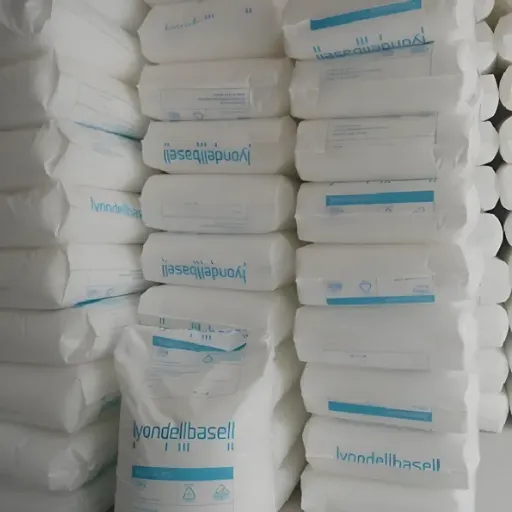
Glass-filled polyamide 66 represents the highest tensile strength commonly available in injection-moldable engineering plastics. PA66 GF30 delivers tensile strengths of 180-200 MPa, flexural modulus above 9,000 MPa, and heat deflection temperatures exceeding 250°C.
The 30% glass fiber reinforcement transforms PA66 from a tough but flexible material into a structural polymer capable of replacing aluminum in many applications. The fibers carry the majority of the tensile load, while the polyamide matrix binds them together and provides chemical resistance.
PA66 GF30 dominates automotive under-hood components, power tool housings, and industrial structural parts. Engine covers, intake manifolds, and pump housings all leverage the combination of high strength and heat resistance. For manufacturers seeking the strongest injection-moldable plastic with proven automotive qualifications, PA66 GF30 is the default specification.
The limitations are real. Glass fibers make the material abrasive to molds and processing equipment. Impact resistance drops significantly compared to unfilled grades.
Moisture absorption affects dimensions and properties over time. Surface finish is matte rather than glossy. These trade-offs are acceptable for structural components but disqualify PA66 GF30 for cosmetic or impact-critical applications.
Higher glass contents exist. PA66 GF50 pushes tensile strength to 220-240 MPa. The material becomes increasingly brittle and difficult to process. GF50 grades suit highly loaded metal replacement applications where impact resistance is secondary to stiffness and strength.
POM: Stiffness and Fatigue Resistance
Polyoxymethylene, also known as acetal, occupies a unique position in high-strength plastics. It does not win on tensile strength alone.
POM homopolymer achieves 65-70 MPa. POM copolymer reaches 60-65 MPa. Where POM excels is in the combination of stiffness, fatigue resistance, and dimensional stability.
POM homopolymer delivers flexural modulus around 2,800 MPa. This is significantly stiffer than unfilled PA66 at 2,000 MPa. Under cyclic loading, POM outperforms virtually all commodity and standard engineering plastics. Gears, bearings, and spring elements molded from POM survive millions of cycles without failure.
The crystalline structure of POM provides excellent creep resistance. A POM bracket under sustained load retains its shape far longer than PC or ABS equivalents. This dimensional stability makes POM the material of choice for precision mechanical components.
For applications requiring low-friction, high-stiffness precision parts, POM delivers performance that competing materials struggle to match. Conveyor rollers, plumbing fittings, and fuel system components all rely on POM's unique property balance.
PBT: Balanced Structural Performance
Polybutylene Terephthalate offers a compelling middle ground in the high-strength plastics landscape. Unfilled PBT delivers 50-60 MPa tensile strength with excellent dimensional stability and low moisture absorption. Glass-filled PBT grades achieve 130-150 MPa while maintaining tight tolerances and electrical insulation properties.
PBT's key advantage is processability. It flows exceptionally well in injection molding, filling thin-wall sections and complex geometries that challenge PA66.
Cycle times are shorter. Shrinkage is more predictable. These processing advantages translate directly into lower manufacturing costs.
The crystallization rate of PBT is faster than PA66, enabling shorter molding cycles. For high-volume production of structural electrical components, automotive sensors, and precision housings, this processing efficiency makes PBT economically attractive even where PA66 GF30 offers marginally higher strength.
For electrical and structural applications requiring fast cycling and dimensional precision, glass-filled PBT provides a proven solution.
Modified Plastics and Custom Compounds: Pushing Strength Boundaries
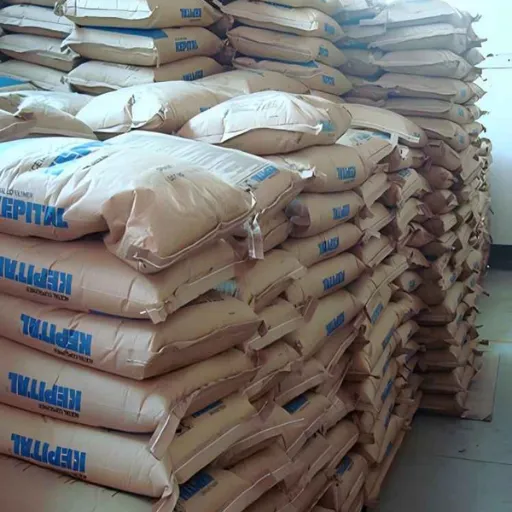
When standard grades do not meet performance requirements, modified plastics and custom compounds extend the boundaries of what plastic materials can achieve. Reinforcement, alloying, and additive technologies create materials with strength profiles unattainable from base polymers alone.
Carbon Fiber Reinforcement pushes stiffness and strength beyond glass fiber capabilities. Carbon-filled PA66 achieves tensile strengths of 250-300 MPa with flexural modulus exceeding 20,000 MPa. These compounds compete with magnesium and aluminum in weight-sensitive structural applications. The trade-offs are cost, conductivity, and abrasive wear on tooling.
Polymer Alloys combine the strengths of multiple base materials. PC/ABS alloys capture PC's impact resistance with ABS's processability and surface quality. PA/PP alloys improve moisture resistance while retaining polyamide strength. These tailored materials solve specific application challenges that no single polymer can address.
Long-Fiber Thermoplastics (LFT) use fibers 10-25 mm long rather than the 0.2-0.5 mm fibers in standard glass-filled compounds. The longer fibers create a three-dimensional reinforcement network that dramatically improves impact resistance while maintaining high stiffness. LFT-PA66 achieves impact values of 40-60 kJ/m² while retaining the stiffness of conventional GF30 grades.
For applications where off-the-shelf grades fall short, custom modified compounds provide tailored solutions. Shanghai Wenqin Plastics offers compounding capabilities for carbon fiber reinforcement, flame-retardant packages, UV stabilization, and application-specific formulations.
Material Strength Comparison Framework
Selecting the strongest plastic material requires a systematic evaluation of the actual loading conditions, environmental exposure, and manufacturing constraints.
Use this comparison as a starting point for material selection:
| Material | Tensile Strength | Impact Strength | Flexural Modulus | Key Strength |
|---|---|---|---|---|
| PC (unfilled) | 60-70 MPa | 60-80 kJ/m² | 2,300 MPa | Impact absorption |
| PC (GF20) | 90-110 MPa | 15-20 kJ/m² | 5,500 MPa | Balanced structural |
| PA66 (unfilled) | 80-90 MPa | 8-12 kJ/m² | 2,000 MPa | Toughness |
| PA66 GF30 | 180-200 MPa | 10-15 kJ/m² | 9,000 MPa | Tensile strength |
| POM homopolymer | 65-70 MPa | 6-8 kJ/m² | 2,800 MPa | Stiffness, fatigue |
| PBT GF30 | 130-150 MPa | 8-10 kJ/m² | 9,000 MPa | Processability + strength |
| PA66 CF30 | 250-300 MPa | 12-18 kJ/m² | 20,000+ MPa | Maximum stiffness |
For impact-critical applications, unfilled PC is the strongest plastic material available in standard grades. For tensile-loaded structural parts, PA66 GF30 dominates. For cyclic-loaded precision components, POM outperforms higher-tensile alternatives. For thin-wall structural parts requiring fast processing, glass-filled PBT offers the best manufacturing economics.
Common Selection Mistakes
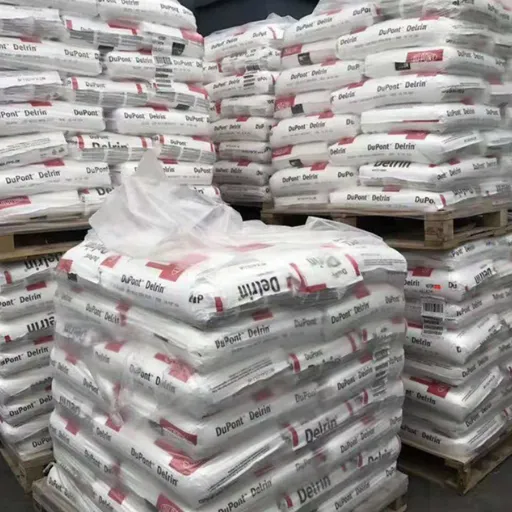
Engineers and procurement teams make predictable errors when searching for the strongest plastic material.
Focusing on a Single Property ignores the reality that components rarely see pure tensile, pure impact, or pure bending loads. A structural bracket sees tensile, compressive, and shear stresses simultaneously. It may also see thermal cycling, chemical exposure, and UV degradation. The strongest plastic material on one metric may fail on another.
Ignoring Processing Constraints creates specification failures. PA66 GF30 requires higher melt temperatures and careful drying. Carbon-filled compounds wear molds rapidly.
Long-fiber materials require specialized injection equipment. A material with superior properties is worthless if it cannot be processed reliably in your facility.
Overlooking Environmental Effects undermines long-term performance. PA66 absorbs moisture and loses stiffness in humid environments. PC degrades under prolonged UV exposure.
PBT hydrolyzes in hot water over time. The laboratory-measured strength of a dry specimen at 23°C does not predict field performance.
Confusing Strength with Stiffness leads to deflection failures. A material with 200 MPa tensile strength but 9,000 MPa flexural modulus will deflect less under load than a material with 300 MPa tensile strength but 3,000 MPa modulus. For beams, frames, and panels, stiffness often governs design more than ultimate strength.
Conclusion
The strongest plastic material depends entirely on how you define strength. Polycarbonate dominates impact resistance. PA66 GF30 leads in tensile strength.
POM excels in fatigue and dimensional stability. Glass-filled PBT balances strength with processing efficiency. Modified compounds and carbon fiber reinforcements extend performance into territory previously reserved for metals.
Key takeaways:
Define the load mode before selecting a material. Impact, tension, fatigue, and stiffness demand different solutions.
PA66 GF30 delivers the highest tensile strength among standard injection-molding grades at 180-200 MPa.
PC provides the best impact resistance for transparent and safety-critical applications.
POM offers superior stiffness, fatigue life, and creep resistance for precision mechanical components.
Glass-filled PBT combines structural strength with excellent flow and dimensional stability.
Modified plastics and custom compounds extend strength boundaries for specialized applications.
Environmental conditions, processing constraints, and long-term performance must factor into selection.
At Shanghai Wenqin Plastics, we supply PC, PA66 GF30, POM, PBT, and modified compounds for high-strength applications. Each grade is backed by complete technical documentation, batch consistency data, and application engineering support. Request a quotation or contact our technical team to identify the strongest plastic material for your specific application requirements.
Recently Posted
-
How to Choose the Right Engineering Plastics Distributor for Your Manufacturing Supply Chain
June 12, 2026When a production line at a German automotive tier-1 supplier ground to a halt last year, the cause was not equipment failure or l Read More
 -
The Plastic Extrusion Process: A Complete Technical Guide for Manufacturers
June 12, 2026When the quality team at a window profile plant in Poland measured wall thickness drift on their PVC line last spring, the culprit Read More
 -
How to Choose an Engineering Plastics Supplier That Protects Your Production Line
June 10, 2026Last March, a tier-2 automotive supplier in Stuttgart received a shipment of PA66 GF30 that looked identical to every batch before Read More
 -
How Long Does Plastic Last? A Materials Engineer's Guide to Polymer Lifespan
June 10, 2026A single polyethylene grocery bag can persist in a landfill for 500 years, yet the same material inside your refrigerator's in Read More

Contact Us
Recommended Products
-
 POM GF-10 Glass-Fiber Reinforced Resin Pellets for Industrial GearsNegotiableMOQ: 1 Kilogram
 -
Duracon POM SW-01 Granules - High-Performance Copolymer Resin for Industrial UseNegotiableMOQ: 1000 Kilograms
-
Basel Origin PP 4160/HP500N General Purpose Injection Molding Homopolymer Polypropylene PP PelletsNegotiableMOQ: 1000 Kilograms
-
Chimei ABS Resin D-1200 for Electronic Enclosures With Flame Retardant PropertiesNegotiableMOQ: 1 Kilogram
-
HDPE Film Grade Hta-001 Injection for High Strength ToughnessNegotiableMOQ: 1 Kilogram
-
High‑Heat‑Resistant Optical‑Grade Polycarbonate PC Resin Teijin SP‑1516 for Camera Lens ManufacturingNegotiableMOQ: 1 Kilogram
-
PC Resin Covestro 1803 With High Impact Resistance for Automotive PartsNegotiableMOQ: 25 Kilograms
-
General Purpose ABS GP-22 From Ineos Ideal for Daily Consumer Goods and Common Injection PartsNegotiableMOQ: 1 Kilogram
-
Celanese DuPont Precision XGC-25 DuPont Injection Molding Plastic Products POMNegotiableMOQ: 1 Kilogram
-
High Impact ABS Plastic Granules HI-121H Industrial Raw MaterialNegotiableMOQ: 1 Kilogram

-
Sinopec PP N-T30S Virgin Wire Drawing Grade Polypropylene GranulesNegotiableMOQ: 1 Kilogram
-
POM F10-03H With High Impact Resistance for Automotive Fuel System ComponentsNegotiableMOQ: 1 Kilogram
-
General Impact Grade ABS PA 737 Fit for Mass Production Daily Plastic and Office Supply PartsNegotiableMOQ: 1 Kilogram
-
366-5 PP Resin Granules With High Impact Strength for Industrial UseNegotiableMOQ: 1 Kilogram
-
PP Granules 3009 - Flame Retardant PP Compound for Electrical Components, UL94 V-2 RatedNegotiableMOQ: 1 Kilogram
-
PC-115P Polycarbonate Resin for 3D Printing Filaments With Low WarpageNegotiableMOQ: 1 Kilogram
-
Low‑Temperature Impact PP Pellets K4750 Modified Copolymer for Automotive BumpersNegotiableMOQ: 1 Kilogram
-
Chimei ABS Resin D-2200 for Luggage and Travel Cases With High RigidityNegotiableMOQ: 1 Kilogram
-
Natural Color Delrin POM M90NAT Celanese DuPont Virgin Resin Raw MaterialNegotiableMOQ: 1 Kilogram
-
FMA016 HDPE Grade for Large-Diameter Corrugated Pipe ProductionNegotiableMOQ: 1 Kilogram