
 Business License
Is Plastic Recyclable? What Every Manufacturer Needs to Know
Last quarter, a procurement manager at a mid-sized automotive supplier in Ohio faced an unexpected problem. Her company had just landed a contract with a European OEM, and one of the first requirements in the specification package was a recycled content declaration for every plastic component. She had sourced PA66 GF30 for years without thinking much about end-of-life. Suddenly, recyclability wasn't a nice-to-have. It was a contract requirement.
Her situation is becoming common. Whether plastic is recyclable is no longer a consumer question confined to curbside bins. It's a procurement question, an engineering question, and increasingly, a regulatory question that affects material selection across automotive, electronics, and appliance manufacturing.
The short answer: some plastics recycle well, others don't, and the details matter enormously. This guide breaks down recyclability by resin type, explains how recycling processes work, and addresses what manufacturers sourcing engineering plastics need to understand about the evolving landscape.
The Seven Plastic Resin Codes and What They Mean for Recycling
Every plastic product carries a Resin Identification Code (RIC), a number from 1 to 7 inside a triangle of arrows. The Society of the Plastics Industry introduced this system in 1988 to identify the base polymer. But the code tells you what the plastic is, not whether it gets recycled. Recyclability varies dramatically between codes, and even within a single code, the grade and application affect outcomes.
Code 1: PET (Polyethylene Terephthalate) -- The Recycling Success Story
PET is the most recycled plastic in the world. Beverage bottles, food containers, and polyester fiber all use this resin. Municipal recycling programs accept it widely, and recycled PET (rPET) has a robust market.
Recycling rate: Approximately 29% in the United States, higher in Europe and Japan.
Recycled into: New bottles, polyester fiber, strapping, thermoformed packaging.
Key challenge: Contamination from food residue and label adhesives reduces yield.
Code 2: HDPE (High-Density Polyethylene) -- Strong Recycling Performance
HDPE recycles well through curbside programs. Milk jugs, detergent bottles, and piping use this resin. Recycled HDPE finds applications in non-food containers, piping, and plastic lumber.
Recycling rate: Approximately 30% in the United States.
Recycled into: Non-food bottles, piping, plastic lumber, playground equipment.
Key challenge: Color sorting affects value. Natural HDPE commands higher prices than colored grades.
Code 3: PVC (Polyvinyl Chloride) -- Limited Recycling
PVC recycling remains limited. Its chlorine content creates challenges during reprocessing, and contamination from additives complicates the recycling stream. Most curbside programs do not accept PVC.
Recycling rate: Less than 1% in most markets.
Recycled into: Flooring, paneling, speed bumps, non-critical industrial products.
Key challenge: Chlorine release during processing; phthalate plasticizers create contamination concerns.
Code 4: LDPE (Low-Density Polyethylene) -- Technically Recyclable, Practically Limited
LDPE is technically recyclable, but collection infrastructure lags behind PET and HDPE. Film wraps, bags, and squeeze bottles use this resin. Some grocery stores accept LDPE film for recycling.
Recycling rate: Approximately 5-10% in most markets.
Recycled into: Trash bags, shipping envelopes, compost bins, floor tiles.
Key challenge: Film collection and sorting are difficult; contamination from food residue.
Code 5: PP (Polypropylene) -- Gaining Ground
PP recycling has expanded in recent years. Yogurt containers, bottle caps, and automotive parts use this resin. Many municipal programs now accept PP, though availability varies by region.
Recycling rate: Growing but still below 10% in most markets.
Recycled into: Automotive battery cases, signal lights, brooms, ice scrapers.
Key challenge: Lower value than PET or HDPE; limited end-market demand historically.
If you're sourcing PP for injection molding applications, you're working with one of the more recyclable engineering-adjacent materials. Our PP grades include homopolymer and copolymer options suitable for applications where recyclability matters alongside mechanical performance.
Code 6: PS (Polystyrene) -- Difficult to Recycle
Polystyrene, including expanded polystyrene (EPS or Styrofoam), recycles poorly. Its low density makes collection and transport economically unviable in most areas. Most programs do not accept it.
Recycling rate: Less than 1% in most markets.
Recycled into: Insulation, molding compound, light switch plates.
Key challenge: Lightweight, easily contaminated, low economic value for recyclers.
Code 7: Other -- Where Engineering Plastics Live
Code 7 is a catch-all category that includes polycarbonate (PC), acrylonitrile butadiene styrene (ABS), nylon (PA6, PA66), acetal (POM), and multi-layer or blended materials. Municipal recycling programs do not accept these resins.
Recycling rate: Minimal for most Code 7 materials.
Recycled into: Limited applications; some mechanical recycling occurs in industrial settings.
Key challenge: Diverse material types, specialized processing requirements, and lack of collection infrastructure.
This is the category that matters most for manufacturers sourcing engineering plastics, and it's where the recyclability conversation gets complicated.
Quick Reference: Plastic Recyclability by Code
| Code | Resin | Recyclability | Typical Rate |
|---|---|---|---|
| 1 | PET | Highly recyclable | ~29% |
| 2 | HDPE | Highly recyclable | ~30% |
| 3 | PVC | Difficult | <1% |
| 4 | LDPE | Limited collection | 5-10% |
| 5 | PP | Increasingly accepted | <10% |
| 6 | PS | Difficult | <1% |
| 7 | Other (PC, ABS, PA) | Industrial only | Minimal |
How Plastic Recycling Actually Works
Understanding recyclability requires understanding the recycling processes themselves. Three primary methods exist. Each has distinct capabilities and limitations. The method used depends on the plastic type, contamination level, and available infrastructure.
Mechanical Recycling
Mechanical recycling is the most established method. It involves collecting, sorting, cleaning, shredding, and reprocessing plastic into pellets for manufacturing.
Process steps:
Collection and sorting by resin type and color
Washing to remove contaminants, labels, and adhesives
Shredding into flakes or chips
Melting and re-pelletizing through extrusion
Quality testing of recycled pellets
Limitations: Each cycle degrades polymer chains, reducing mechanical properties. Most thermoplastics can withstand only 3-7 recycling cycles before properties fall below usable thresholds. Engineering plastics with glass fiber reinforcement face additional challenges, as fiber length shortens during reprocessing, reducing the stiffness and strength that made the grade specification meaningful in the first place.
For manufacturers, mechanical recycling of post-industrial scrap is the most accessible option. Clean sprues and runners from injection molding can be ground and reprocessed with minimal property loss, often blended with virgin material at ratios of 20-30%.
Chemical Recycling
Chemical recycling breaks polymers back into monomers or feedstock chemicals. This approach can theoretically produce virgin-quality material from waste plastics.
Types:
Pyrolysis: Thermal decomposition in the absence of oxygen, producing fuel or chemical feedstock
Depolymerization: Chemical breakdown of specific polymers (PET, nylon) into monomers for repolymerization
Solvent-based purification: Dissolving target polymers in selective solvents to separate them from contaminants and additives
Advantages: Can handle mixed and contaminated plastics that mechanical recycling cannot. Produces material closer to virgin quality.
Current status: Scaling up. Several commercial operations exist, but capacity remains far below mechanical recycling. Cost per kilogram typically exceeds virgin material in many applications. For engineering plastics, chemical recycling remains largely in the research and pilot phase, with PA6 caprolactam recovery being the most commercially advanced example.
Energy Recovery
When recycling is not technically or economically viable, incineration with energy recovery captures the calorific value of plastic waste. This is not recycling in the traditional sense but diverts plastic from landfills. Many European countries rely on energy recovery for plastics that cannot be mechanically or chemically recycled.
Want to understand how different plastic types compare for your specific application? Explore our material selection guide for detailed property comparisons across engineering plastics.
Common Misconceptions About Plastic Recycling
Before diving into engineering plastics, it helps to address a few misconceptions that create confusion in material selection decisions.
Misconception 1: The recycling symbol means the product is recyclable. The triangle of arrows with a number identifies the resin type. It does not guarantee that local recycling programs accept the material. Many Code 7 products carry the symbol but end up in landfills.
Misconception 2: All recycled plastic is the same quality. Recycled plastic varies widely in quality. Post-industrial scrap from a controlled factory environment produces much cleaner material than post-consumer waste collected from mixed sources. The source matters as much as the resin type.
Misconception 3: Recycling always reduces environmental impact. Recycling requires energy, water, and transportation. For some materials, the benefit is clear. For others, especially when shipping low-value scrap long distances, the math gets complicated.
Understanding these nuances helps manufacturers make informed decisions rather than relying on assumptions.
Engineering Plastics Recycling: The Real Challenge
For manufacturers sourcing PA66, PC, ABS, POM, PBT, and PMMA, recyclability presents specific challenges that differ fundamentally from commodity plastics.
Why Engineering Plastics Are Hard to Recycle
Material complexity: Engineering plastics often contain glass fibers, mineral fillers, flame retardants, UV stabilizers, and colorants. Each additive affects the recycling process and the quality of recycled material. A PA66 GF30 grade with heat stabilization and flame retardancy is not the same material after reprocessing as it was going in.
Contamination in use: Automotive under-hood components, electronics housings, and industrial parts accumulate oils, adhesives, metal inserts, and coatings during their service life. Removing these contaminants adds cost and complexity to recycling.
Small volumes: Compared to PET bottles or HDPE containers, individual engineering plastic applications generate relatively small waste streams. Recycling infrastructure economics favor high-volume, uniform waste streams.
Property requirements: Recycled engineering plastics must meet the same mechanical, thermal, and chemical resistance specifications as virgin material. Achieving this with reprocessed, degraded polymer chains is difficult.
Which Engineering Plastics Can Be Recycled
When James, a manufacturing engineer at a Tier-1 automotive supplier, audited his plant's waste streams in early 2025, he expected to find mostly commodity scrap. Instead, he discovered that 40% of their plastic waste was clean PA66 sprues and runners from injection molding, material that was going to landfill because nobody had set up a return loop with their molder. Within three months, he established a closed-loop system that saved the company over $80,000 annually in raw material costs.
His experience illustrates a key point: the recyclability of engineering plastics often depends less on the material itself and more on the systems built around it.
ABS: Mechanically recyclable in controlled industrial settings. Post-industrial ABS scrap (sprues, runners, rejected parts) reprocesses well with minimal property loss. Post-consumer ABS recycling is limited by contamination and collection challenges. For manufacturers using ABS resin in injection molding, collecting clean process scrap for regrind is the most practical recycling approach.
PA6 and PA66: Nylon recycling is more advanced than many engineering plastics. Chemical depolymerization of PA6 (caprolactam recovery) is commercially established. PA66 recycling is more challenging, but mechanical recycling of clean, post-industrial scrap is feasible. PA66 grades with glass fiber reinforcement lose fiber length during reprocessing, so recycled material typically serves less demanding applications.
PC: Polycarbonate can be mechanically recycled when clean and uncontaminated. Post-industrial PC scrap from optical disc production and other manufacturing processes enters the recycling stream. Post-consumer PC recycling remains limited.
POM: Acetal recycling is difficult due to thermal sensitivity during reprocessing. Formaldehyde release during melting creates safety and quality concerns. Limited recycling infrastructure exists for POM.
PBT and PMMA: Both can be mechanically recycled from clean, post-industrial sources. PMMA recycling, particularly through depolymerization back to methyl methacrylate monomer, has commercial applications in some markets.
Need help evaluating which engineering plastic grades fit your sustainability and performance requirements? Contact our technical team for material selection guidance tailored to your application.
Post-Industrial vs. Post-Consumer Recycling
The distinction matters significantly for engineering plastics:
Post-industrial recycling (also called pre-consumer): Manufacturing scrap, sprues, runners, and off-spec pellets from production. This material is clean, uniform, and well-characterized. Most engineering plastics recycling occurs here.
Post-consumer recycling: Products that have reached end-of-life and are collected from consumers or businesses. Contamination, degradation, and material mixing make this far more challenging for engineering plastics.
For manufacturers, designing for post-industrial recycling offers the most practical path. Clean sprues and runners from injection molding can be reprocessed directly, often blended with virgin material at controlled ratios.
Design for Recyclability in Manufacturing
Manufacturers increasingly face requirements to consider end-of-life recyclability in product design. These principles apply to engineering plastics applications:
Material Simplification
Using a single material family where possible simplifies recycling. Multi-material assemblies with metal inserts, adhesive bonds, or mixed polymer types create separation challenges.
Practical approach: Where design permits, use snap-fits instead of adhesive bonds. Design metal inserts for easy removal. Specify compatible plastic families within assemblies. For example, if an automotive interior panel uses ABS for the rigid substrate, choose ABS-based compounds for any overmolded or adjacent components rather than switching to a different polymer family.
Labeling and Identification
Clear material identification on large components helps recyclers sort and process end-of-life parts. Molded-in resin codes or laser marking support this. The International Organization for Standardization (ISO) 11469 standard provides a framework for marking plastic parts with material identification.
Avoiding Problematic Additives
Some flame retardants, colorants, and stabilizers complicate recycling. Halogenated flame retardants in particular face regulatory pressure and can contaminate recycling streams. Halogen-free alternatives are increasingly available for most applications.
Our modified plastics portfolio includes halogen-free flame retardant grades that simplify end-of-life processing while meeting safety requirements.
Designing for Disassembly
Products designed for easy disassembly enable material separation at end-of-life. This is particularly relevant for automotive and electronics applications where material recovery targets apply. Practical steps include using mechanical fasteners instead of adhesives, standardizing screw types within assemblies, and providing access points for disassembly tools.
Regulatory Landscape and Recycled Content Requirements
Manufacturers should be aware of evolving regulations affecting plastic recyclability:
European Union
The EU's Circular Economy Action Plan sets recycling targets and mandates recycled content in certain applications. The Packaging and Packaging Waste Regulation requires minimum recycled content percentages in plastic packaging. Extended Producer Responsibility (EPR) schemes place end-of-life management obligations on producers.
United States
State-level recycled content laws are emerging, particularly for packaging. California, New Jersey, and Washington have enacted minimum recycled content requirements for plastic containers. Federal legislation remains limited, but the trend toward mandatory recycled content is clear.
Automotive Sector
End-of-Life Vehicle (ELV) directives require minimum recycling and recovery rates for automotive components. The EU's proposed revised ELV regulation targets 25% recycled content in new vehicles by 2030. For automotive manufacturers sourcing engineering plastics, this means recycled content declarations will increasingly become part of the material qualification process.
Electronics Sector
WEEE (Waste Electrical and Electronic Equipment) directives require collection and recycling of electronics. Design for recyclability guidelines increasingly influence material selection for electronics housings and components.
Implications for Material Selection
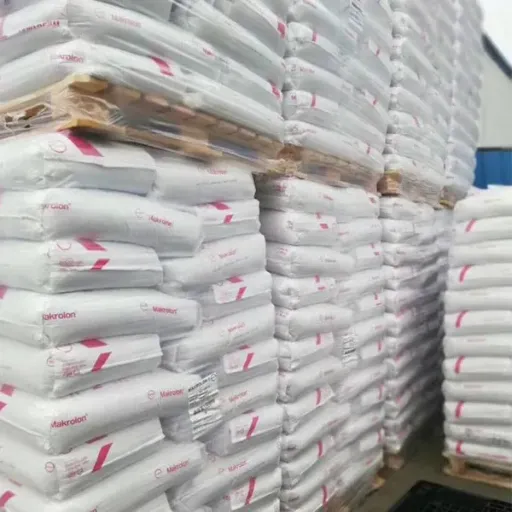
When sourcing engineering plastics for manufacturing, recyclability considerations should inform material selection alongside traditional criteria like mechanical properties, thermal performance, and cost. The weight you give recyclability depends on your industry, your customers, and the regulatory environment you operate in.
For applications where end-of-life recycling is a priority:
Consider materials with established recycling infrastructure (PP, HDPE where properties permit)
Specify halogen-free flame retardant grades to simplify recycling
Use single-material designs where possible
Source from suppliers who can provide post-industrial recycled content
For applications where performance requirements dominate:
Document material choices for future recycling potential
Design for disassembly to enable material separation
Establish scrap return programs with molding partners for post-industrial recycling
Monitor chemical recycling developments for your specific resin types
A balanced approach often works best. Maria, a materials engineer at an electronics manufacturer, recently specified PC/ABS for a new product housing. She chose a halogen-free flame-retardant grade that met both UL94 V-0 requirements and the company's internal sustainability targets. The grade cost about 8% more than the standard alternative, but it simplified end-of-life processing and positioned the product ahead of upcoming regulatory requirements.
Practical Steps for Manufacturers
If you're sourcing engineering plastics and recyclability matters to your business, here are concrete steps to take now:
Audit your waste streams. Identify what types of plastic scrap your facility generates and where it goes. Many manufacturers discover, like James did, that valuable material is going to landfill simply because no one set up a collection system.
Talk to your molder. If you use contract injection molders, ask about their regrind practices. Clean sprues and runners can often be reprocessed on-site or returned to you for recycling.
Specify with recyclability in mind. When selecting grades, consider halogen-free flame retardant options and single-material designs. The premium is often small compared to the long-term benefits.
Document everything. Keep records of material grades, additives, and compliance certificates. This documentation becomes essential when recycling regulations tighten or customers request sustainability declarations.
Stay informed on regulations. The regulatory landscape around recycled content and extended producer responsibility is evolving fast. What's optional today may be mandatory in two years.
Conclusion
Is plastic recyclable? The answer depends on which plastic, which recycling infrastructure, and which application context you're examining. Commodity plastics like PET and HDPE have established recycling streams. Engineering plastics face more complex challenges, but post-industrial recycling, chemical recycling advances, and design-for-recyclability principles are expanding options for manufacturers.
For procurement managers and materials engineers, the practical takeaway is this: recyclability is becoming a material selection criterion alongside traditional properties. Understanding which plastics recycle, how the processes work, and what design choices enable recycling positions you to meet evolving regulatory requirements and customer expectations.
Shanghai Wenqin Plastics supplies engineering plastics across ABS, PC, PA6, PA66, POM, PP, PE, PBT, and PMMA grades. Our technical team can help you evaluate material options that balance performance requirements with sustainability considerations, including grades with halogen-free flame retardant packages and materials suitable for closed-loop manufacturing scrap recycling. Request a technical data sheet or contact our material selection team to discuss your specific requirements.
Recently Posted
-
How to Choose the Right Engineering Plastics Distributor for Your Manufacturing Supply Chain
June 12, 2026When a production line at a German automotive tier-1 supplier ground to a halt last year, the cause was not equipment failure or l Read More
 -
The Plastic Extrusion Process: A Complete Technical Guide for Manufacturers
June 12, 2026When the quality team at a window profile plant in Poland measured wall thickness drift on their PVC line last spring, the culprit Read More
 -
How to Choose an Engineering Plastics Supplier That Protects Your Production Line
June 10, 2026Last March, a tier-2 automotive supplier in Stuttgart received a shipment of PA66 GF30 that looked identical to every batch before Read More
 -
How Long Does Plastic Last? A Materials Engineer's Guide to Polymer Lifespan
June 10, 2026A single polyethylene grocery bag can persist in a landfill for 500 years, yet the same material inside your refrigerator's in Read More

Contact Us
Recommended Products
-
 POM GF-10 Glass-Fiber Reinforced Resin Pellets for Industrial GearsNegotiableMOQ: 1 Kilogram
 -
Duracon POM SW-01 Granules - High-Performance Copolymer Resin for Industrial UseNegotiableMOQ: 1000 Kilograms
-
Basel Origin PP 4160/HP500N General Purpose Injection Molding Homopolymer Polypropylene PP PelletsNegotiableMOQ: 1000 Kilograms
-
Chimei ABS Resin D-1200 for Electronic Enclosures With Flame Retardant PropertiesNegotiableMOQ: 1 Kilogram
-
HDPE Film Grade Hta-001 Injection for High Strength ToughnessNegotiableMOQ: 1 Kilogram
-
High‑Heat‑Resistant Optical‑Grade Polycarbonate PC Resin Teijin SP‑1516 for Camera Lens ManufacturingNegotiableMOQ: 1 Kilogram
-
PC Resin Covestro 1803 With High Impact Resistance for Automotive PartsNegotiableMOQ: 25 Kilograms
-
General Purpose ABS GP-22 From Ineos Ideal for Daily Consumer Goods and Common Injection PartsNegotiableMOQ: 1 Kilogram
-
Celanese DuPont Precision XGC-25 DuPont Injection Molding Plastic Products POMNegotiableMOQ: 1 Kilogram
-
High Impact ABS Plastic Granules HI-121H Industrial Raw MaterialNegotiableMOQ: 1 Kilogram

-
Sinopec PP N-T30S Virgin Wire Drawing Grade Polypropylene GranulesNegotiableMOQ: 1 Kilogram
-
POM F10-03H With High Impact Resistance for Automotive Fuel System ComponentsNegotiableMOQ: 1 Kilogram
-
General Impact Grade ABS PA 737 Fit for Mass Production Daily Plastic and Office Supply PartsNegotiableMOQ: 1 Kilogram
-
366-5 PP Resin Granules With High Impact Strength for Industrial UseNegotiableMOQ: 1 Kilogram
-
PP Granules 3009 - Flame Retardant PP Compound for Electrical Components, UL94 V-2 RatedNegotiableMOQ: 1 Kilogram
-
PC-115P Polycarbonate Resin for 3D Printing Filaments With Low WarpageNegotiableMOQ: 1 Kilogram
-
Low‑Temperature Impact PP Pellets K4750 Modified Copolymer for Automotive BumpersNegotiableMOQ: 1 Kilogram
-
Chimei ABS Resin D-2200 for Luggage and Travel Cases With High RigidityNegotiableMOQ: 1 Kilogram
-
Natural Color Delrin POM M90NAT Celanese DuPont Virgin Resin Raw MaterialNegotiableMOQ: 1 Kilogram
-
FMA016 HDPE Grade for Large-Diameter Corrugated Pipe ProductionNegotiableMOQ: 1 Kilogram