
 Business License

Extrusion vs Injection Molding: Choosing the Right Process for Your Plastic Components
When Marcus Lin, a procurement manager at a Guangdong electronics manufacturer, received a quotation for 50,000 linear meters of ABS edge trim in March 2025, he assumed the material would arrive as pellets ready for his injection molding lines. Instead, the supplier delivered extrusion-grade ABS with a melt flow index of 1.2 g/10min. His molding machines struggled to fill thin-wall cavities. Cycle times doubled. Scrap rates climbed to 18%. The $12,000 he saved on material cost evaporated within two weeks of lost production capacity.
Marcus's mistake is more common than most engineers admit. The terms "extrusion" and "injection molding" describe fundamentally different manufacturing processes. Each demands specific material grades, tooling approaches, and design rules. Choosing the wrong process, or the wrong material for the right process, creates consequences that ripple through production schedules, part quality, and project budgets.
This guide provides a direct comparison of extrusion vs injection molding. You will learn how each process works, which thermoplastics suit each method, where costs diverge, and how to match part geometry to the most efficient manufacturing approach. By the end, you will have a practical framework for selecting the right process and the right material grade for your specific application.
What Is Plastic Extrusion?
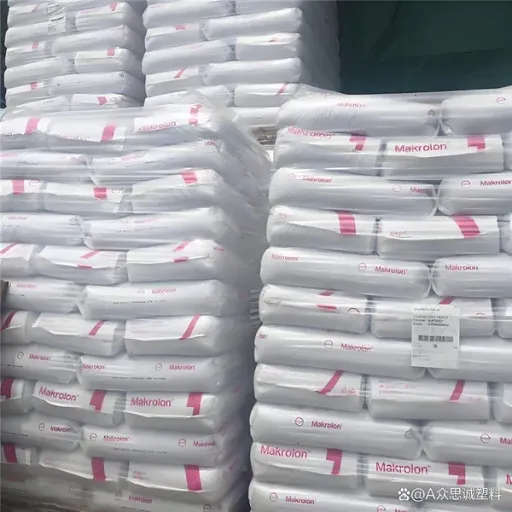
Plastic extrusion is a continuous manufacturing process that shapes molten thermoplastic into a fixed cross-sectional profile. A single-screw or twin-screw extruder melts polymer pellets and forces the viscous material through a shaped die. As the extrudate exits the die, it enters a calibration and cooling system that locks the profile into its final dimensions.
How the Extrusion Process Works
The process begins with dried polymer pellets fed into the extruder hopper. Inside the heated barrel, a rotating screw conveys the material forward while shear heat and barrel temperature raise the polymer to its processing temperature. For ABS, this typically means 200-240°C. For PA66, temperatures reach 280-300°C.
As the molten polymer reaches the die head, it flows through a carefully machined steel opening that defines the part profile. Dies for complex shapes may include multiple flow channels, vacuum calibration sleeves, and cooling zones. After forming, the profile passes through a water bath or air cooling station before a caterpillar haul-off pulls it at a controlled rate. Finally, a cut-off saw or coiler sections the continuous length into finished pieces.
The continuous nature of extrusion makes it ideal for products with consistent cross-sections. Production runs can extend for hours or days with minimal interruption, provided material feed and cooling remain stable.
Common Extrusion Materials and Products
Not all thermoplastics extrude equally. High-viscosity grades with lower melt flow indices generally perform better because they maintain shape after exiting the die. Common extrusion-grade materials include:
Rigid PVC: Window frames, pipe, conduit, and trim profiles
ABS: Edge banding, refrigerator liners, and automotive trim
PC: Optical profiles, lighting diffusers, and structural channels
PP and PE: Pipe, sheet, film, and geomembrane applications
PA6 and PA66: Monofilament, rod stock, and high-strength profiles
Shanghai Wenqin Plastics supplies extrusion-grade ABS, PC, PA6, PA66, PP, PE, and rigid PVC with melt flow indices and viscosity profiles optimized for continuous profile production. Explore our engineering plastics portfolio to find grades matched to your extrusion requirements.
What Is Injection Molding?
Injection molding is a cyclic process that produces discrete three-dimensional parts by injecting molten thermoplastic into a closed mold cavity. Unlike extrusion, which generates continuous lengths, injection molding creates individual components with complex geometries, undercuts, threads, and varying wall thicknesses.
How the Injection Molding Process Works
The cycle begins with plastic pellets fed into a heated barrel. A reciprocating screw melts and homogenizes the material while accumulating a measured shot volume at the front of the barrel. When the mold closes, the screw advances axially and injects the molten polymer into the cavity under high pressure, typically 80-150 MPa for most engineering plastics.
After injection, the material cools under hold pressure to compensate for shrinkage. Once the part solidifies sufficiently, the mold opens and ejector pins push the finished component out of the cavity. The cycle repeats, with typical cycle times ranging from 15 seconds for small ABS parts to 90 seconds for thick-wall PA66 components.
The closed-mold nature of injection molding enables precise dimensional control, excellent surface finish reproduction, and the ability to form complex geometries impossible with extrusion. Multi-cavity molds can produce dozens of parts per cycle, making injection molding the dominant process for high-volume plastic component manufacturing.
Common Injection Molding Materials and Products
Injection molding accommodates a broader range of part geometries than extrusion, and material selection reflects this versatility. High-flow grades with melt flow indices above 5 g/10min fill thin-wall cavities more readily. Common injection molding materials include:
ABS: Electronics housings, appliance panels, automotive interior trim, and toy components
PC: Electrical enclosures, automotive lighting lenses, medical device housings, and safety equipment
PA6 and PA66: Automotive under-hood components, electrical connectors, gears, and bearing cages
POM: Precision gears, conveyor components, automotive fuel system parts, and plumbing fittings
PP and PE: Automotive bumpers, appliance housings, packaging, and industrial containers
PBT: Electrical connectors, automotive sensors, circuit breaker housings, and ignition components
PMMA: Lighting diffusers, display panels, automotive tail light lenses, and signage
For manufacturers evaluating injection molding grades for demanding applications, Shanghai Wenqin Plastics maintains inventory of high-flow ABS, PC, PA66 GF30, POM, and PBT grades with predictable processing behavior and consistent lot-to-lot quality.
Key Differences Between Extrusion and Injection Molding
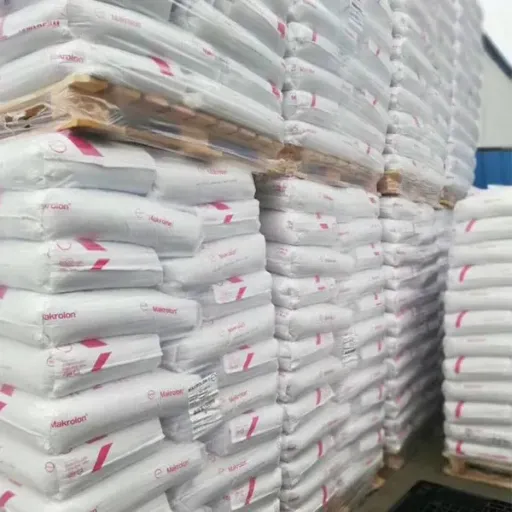
Understanding the technical distinctions between these processes helps engineers and procurement professionals avoid the costly misalignment that Marcus experienced. The following comparison summarizes the most critical differences:
| Factor | Plastic Extrusion | Injection Molding |
|---|---|---|
| Part Geometry | Continuous profiles with fixed cross-section | Discrete 3D parts with complex geometry |
| Production Mode | Continuous, theoretically unlimited length | Cyclic, one shot per cycle per cavity |
| Tooling Cost | Moderate; single die and calibration tooling | Higher; precision mold with cooling and ejection systems |
| Material Viscosity | Higher viscosity, lower MFI preferred | Lower viscosity, higher MFI preferred for thin walls |
| Wall Thickness | Uniform across profile | Can vary within single part |
| Surface Finish | Good, die-line dependent | Excellent, reproduces mold surface detail |
| Dimensional Tolerance | Moderate, influenced by pull rate and cooling | Tight, controlled by mold precision and process parameters |
| Setup Time | Longer die change and calibration setup | Faster mold change with standardized systems |
| Scrap Rate | Low continuous scrap, mostly startup waste | Higher potential for short shots, flash, and warp |
| Part Cost at Volume | Very low for continuous lengths | Low per part at high volumes, amortizing mold cost |
These differences guide material selection, tooling investment, and design decisions. A part with uniform cross-section and long lengths almost always favors extrusion. A part with bosses, ribs, threads, or varying wall thickness demands injection molding.
Material Selection: Which Thermoplastics Suit Each Process?
The distinction between extrusion vs injection molding extends beyond machinery and tooling. Resin manufacturers formulate grades specifically for one process or the other, adjusting molecular weight distribution, additive packages, and rheological properties to match processing demands.
Extrusion-Grade Resins
Extrusion-grade resins typically exhibit higher molecular weight and narrower molecular weight distribution. These characteristics improve melt strength, which is the polymer's ability to hold its shape after exiting the die. Without adequate melt strength, a profile sags, deforms, or loses dimensional accuracy during cooling.
Key properties of extrusion grades include:
Lower melt flow index: Typically 0.5-3.0 g/10min, though some applications accept higher values
Higher melt strength: Prevents sag in large profiles and hollow sections
Broader thermal stability: Resists degradation during extended residence times in the extruder
Specific lubricant packages: Reduce die buildup and improve surface finish
When Sarah Kim, a product engineer at a Seoul appliance manufacturer, specified PC profiles for a refrigerator door liner in 2024, she selected an extrusion-grade PC with an MFI of 3.0 g/10min. The grade's high melt strength allowed her supplier to produce complex hollow profiles with tight corner radii. An injection molding grade with an MFI of 10 g/10min would have sagged in the calibration tank, producing warped sections that would not seal properly against the door gasket.
Injection Molding-Grade Resins
Injection molding grades prioritize rapid flow into thin cavities, fast crystallization or solidification, and easy ejection from the mold. These requirements favor different rheological properties than extrusion.
Key properties of injection molding grades include:
Higher melt flow index: Typically 5-30 g/10min for standard applications; high-flow grades exceed 50 g/10min for thin-wall molding
Faster solidification: Promotes shorter cycle times and higher productivity
Improved mold release: Lubricant and additive packages reduce sticking in complex cavities
Balanced shrinkage: Predictable shrinkage rates simplify mold design and dimensional control
The same base polymer can exist in dramatically different process-specific formulations. PA66 GF30 for extrusion may have an MFI of 1.5 g/10min and a broad molecular weight distribution. PA66 GF30 for injection molding may have an MFI of 5.0 g/10min with flow promoters and mold-release additives. Substituting one for the other invites processing problems, dimensional issues, and compromised mechanical properties.
Technical Note: Always verify the processing method recommended by the resin manufacturer before specifying a grade. Technical Data Sheets indicate whether a grade is optimized for extrusion, injection molding, blow molding, or multiple processes. When in doubt, request a Technical Data Sheet and confirm melt flow index, processing temperature range, and recommended applications.
When to Choose Extrusion Over Injection Molding
Extrusion excels in applications where continuous lengths, uniform profiles, and cost efficiency at scale matter more than three-dimensional complexity. Consider extrusion when your project meets these criteria:
Long, continuous products: Pipe, tubing, sheet, film, and profile shapes that extend for meters or kilometers favor extrusion's continuous production mode. Attempting to injection mold pipe sections and weld them together would multiply costs and create weakness at joints.
Uniform cross-sections: Window frames, trim, edging, and structural channels with consistent profiles across their entire length process efficiently through extrusion dies. Changes to the profile require only die modification, not complete mold redesign.
Lower tooling investment for simple shapes: While complex extrusion dies can be expensive, simple solid profiles often require less capital investment than injection molds, particularly for smaller production volumes.
Large surface area products: Extruded sheet and film products cover broad areas with thin, uniform material thickness. Injection molding cannot economically produce flat sheet stock.
Coextrusion opportunities: Extrusion lines can run multiple materials simultaneously through coextrusion dies, producing profiles with rigid structural cores and soft sealing lips, or multi-layer films with barrier properties.
When to Choose Injection Molding Over Extrusion
Injection molding dominates manufacturing for discrete components with complex geometry, tight tolerances, and high-volume demand. Choose injection molding when these conditions apply:
Complex three-dimensional geometry: Parts with ribs, bosses, snap fits, threads, and living hinges require the closed-cavity approach of injection molding. Extrusion cannot produce features perpendicular to the primary flow direction.
Tight dimensional tolerances: Precision mold cavities, controlled cooling, and hold pressure enable injection molding to achieve tolerances of ±0.05 mm or tighter. Extrusion profiles typically tolerate ±0.1 to ±0.3 mm depending on size and material.
High-volume production: While extrusion tooling costs less for simple profiles, injection molding amortizes higher mold costs across millions of parts. At volumes above 10,000 units annually, injection molding often delivers lower per-part costs.
Varied wall thickness within one part: Injection molding accommodates transitions from thick structural sections to thin decorative walls. Extrusion requires uniform wall thickness throughout the profile.
Superior surface finish: Molded parts reproduce polished steel surfaces, textured finishes, and laser-etched details with high fidelity. Extrusion surfaces show die lines and calibration sleeve marks that may require secondary finishing.
Ready to evaluate injection molding materials for your next project? Speak to our technical team for material selection guidance tailored to your part geometry, volume requirements, and performance specifications.
Cost, Tooling, and Production Volume Considerations
The economics of extrusion vs injection molding depend heavily on part geometry, annual volume, and tooling strategy. Understanding the break-even points helps procurement teams justify capital expenditures and select the most cost-effective manufacturing route.
Tooling Investment and Lead Times
Extrusion dies for simple solid profiles typically cost $2,000 to $10,000 and require 2-4 weeks to machine and polish. Complex hollow profiles with vacuum calibration tooling may reach $20,000 to $50,000. Die changes on extrusion lines require several hours of setup and calibration time.
Injection molds for small, simple parts start around $5,000 to $15,000 for single-cavity aluminum tools. Hardened steel multi-cavity molds for complex engineering plastic parts can exceed $100,000. Mold fabrication lead times range from 4-12 weeks depending on complexity and cavitation. However, mold changes on modern injection molding machines with quick-change systems can complete in under 30 minutes.
Production Efficiency and Part Cost
When Chen Wei, operations director at a Ningbo automotive supplier, evaluated manufacturing methods for a new PA66 cable duct in 2024, he compared extrusion and injection molding economics side by side. The extrusion die cost $8,000 and produced 120 meters per hour. The injection mold cost $45,000 but produced 4 parts per cycle with a 45-second cycle time.
At an annual volume of 50,000 meters, extrusion delivered a per-meter cost of $0.85 including material, labor, and amortized tooling. Injection molding the same profile in 1-meter sections produced a per-meter cost of $1.40 due to higher tooling amortization and slower effective throughput.
At 500,000 meters annually, the picture shifted. Extrusion remained efficient at $0.72 per meter. However, injection molding's per-meter cost dropped to $0.68 as the mold amortization diluted across far more parts. The break-even point for this specific geometry fell around 300,000 meters annually.
This example illustrates a critical principle: extrusion often wins at low to moderate volumes for profile-shaped products, while injection molding becomes competitive at very high volumes or when complex end features eliminate secondary assembly steps.
Quality Control and Dimensional Accuracy
Both processes demand rigorous quality control, but the focus areas differ. Extrusion quality control emphasizes profile dimensions, surface finish consistency, and linearity. Operators measure wall thickness, width, and height with calipers and laser gauges at regular intervals. Vacuum calibration pressure, haul-off speed, and cooling water temperature require constant monitoring to prevent dimensional drift.
Injection molding quality control focuses on part weight, dimensional stability, warp, sink marks, and cosmetic defects. Process parameters including melt temperature, injection pressure, hold pressure, cooling time, and mold temperature all influence part quality. Statistical process control charts track critical dimensions across production runs.
Regardless of process, incoming material inspection remains essential. Verify melt flow index, moisture content, and color consistency against Technical Data Sheet specifications before production. Lot-to-lot variation in resin properties causes more processing problems than most operators recognize.
Shanghai Wenqin Plastics provides certificates of analysis with every batch, documenting melt flow index, density, and key mechanical properties. This documentation supports your incoming inspection program and helps isolate process problems from material variation.
Conclusion
Extrusion vs injection molding is not a question with a universal answer. It is a decision that depends on part geometry, production volume, material requirements, and economic constraints. Extrusion delivers continuous profiles with low per-meter costs and moderate tooling investment. Injection molding produces complex discrete parts with tight tolerances and excellent surface finish at high volumes.
The material grade matters as much as the process itself. Extrusion-grade resins with higher melt strength and lower MFI values perform poorly in injection molding machines. Injection molding grades with high flow characteristics may sag and distort in extrusion dies. Matching the right material to the right process prevents the production disasters that cost manufacturers time, money, and customer confidence.
Key takeaways:
Match the process to the part geometry: Continuous profiles favor extrusion; complex 3D parts demand injection molding.
Verify material grade compatibility: Extrusion grades and injection molding grades of the same base polymer process differently.
Calculate total cost of ownership: Include tooling amortization, scrap rates, secondary operations, and logistics in your comparison.
Invest in incoming inspection: Batch variation affects both processes; verify material properties before production startup.
Consult technical resources early: Material selection decisions made at the design stage prevent expensive corrections later.
At Shanghai Wenqin Plastics, we supply extrusion-grade and injection molding-grade ABS, PC, PA6, PA66, POM, PP, PE, PBT, and PMMA with complete Technical Data Sheets and batch certificates of analysis. Our technical team provides material selection guidance, processing recommendations, and application support to ensure you specify the right grade for your manufacturing method.
Request a quotation for your next extrusion or injection molding project, or contact our technical team to discuss material selection for your specific process requirements.
Recently Posted
-
How to Choose an Engineering Plastics Supplier That Protects Your Production Line
June 10, 2026Last March, a tier-2 automotive supplier in Stuttgart received a shipment of PA66 GF30 that looked identical to every batch before Read More
 -
How Long Does Plastic Last? A Materials Engineer's Guide to Polymer Lifespan
June 10, 2026A single polyethylene grocery bag can persist in a landfill for 500 years, yet the same material inside your refrigerator's in Read More
 -
How to Identify Plastic Type: A Practical Guide for Materials Engineers and Procurement Managers
June 10, 2026A shipment arrives at your receiving dock. The labels are damaged, the certificates of analysis are missing, and your production l Read More
 -
Which Plastics Are Food Safe? A Materials Engineer's Guide to FDA Food Contact Compliance
June 10, 2026Maria's production line ground to a halt on a Tuesday morning in March. Her injection molding facility had just shipped 50,000 Read More

Contact Us
Recommended Products
-
 POM GF-10 Glass-Fiber Reinforced Resin Pellets for Industrial GearsNegotiableMOQ: 1 Kilogram
 -
Duracon POM SW-01 Granules - High-Performance Copolymer Resin for Industrial UseNegotiableMOQ: 1000 Kilograms
-
Basel Origin PP 4160/HP500N General Purpose Injection Molding Homopolymer Polypropylene PP PelletsNegotiableMOQ: 1000 Kilograms
-
Chimei ABS Resin D-1200 for Electronic Enclosures With Flame Retardant PropertiesNegotiableMOQ: 1 Kilogram
-
HDPE Film Grade Hta-001 Injection for High Strength ToughnessNegotiableMOQ: 1 Kilogram

-
High‑Heat‑Resistant Optical‑Grade Polycarbonate PC Resin Teijin SP‑1516 for Camera Lens ManufacturingNegotiableMOQ: 1 Kilogram
-
PC Resin Covestro 1803 With High Impact Resistance for Automotive PartsNegotiableMOQ: 25 Kilograms
-
General Purpose ABS GP-22 From Ineos Ideal for Daily Consumer Goods and Common Injection PartsNegotiableMOQ: 1 Kilogram
-
Celanese DuPont Precision XGC-25 DuPont Injection Molding Plastic Products POMNegotiableMOQ: 1 Kilogram
-
High Impact ABS Plastic Granules HI-121H Industrial Raw MaterialNegotiableMOQ: 1 Kilogram


-
Sinopec PP N-T30S Virgin Wire Drawing Grade Polypropylene GranulesNegotiableMOQ: 1 Kilogram
-
POM F10-03H With High Impact Resistance for Automotive Fuel System ComponentsNegotiableMOQ: 1 Kilogram
-
General Impact Grade ABS PA 737 Fit for Mass Production Daily Plastic and Office Supply PartsNegotiableMOQ: 1 Kilogram
-
366-5 PP Resin Granules With High Impact Strength for Industrial UseNegotiableMOQ: 1 Kilogram
-
PP Granules 3009 - Flame Retardant PP Compound for Electrical Components, UL94 V-2 RatedNegotiableMOQ: 1 Kilogram
-
PC-115P Polycarbonate Resin for 3D Printing Filaments With Low WarpageNegotiableMOQ: 1 Kilogram
-
Low‑Temperature Impact PP Pellets K4750 Modified Copolymer for Automotive BumpersNegotiableMOQ: 1 Kilogram
-
Chimei ABS Resin D-2200 for Luggage and Travel Cases With High RigidityNegotiableMOQ: 1 Kilogram
-
Natural Color Delrin POM M90NAT Celanese DuPont Virgin Resin Raw MaterialNegotiableMOQ: 1 Kilogram
-
FMA016 HDPE Grade for Large-Diameter Corrugated Pipe ProductionNegotiableMOQ: 1 Kilogram