
 Business License

Rotational Molding Process: A Complete Technical Guide for Manufacturers
What if a single manufacturing method could produce seamless, stress-free plastic tanks, toys, and industrial containers up to 20,000 liters in volume without weld lines or material waste? For decades, the rotational molding process has done exactly that—quietly serving industries from agriculture to aerospace with hollow plastic parts that other methods simply cannot produce economically.
You likely already encounter rotomolded products daily, even if you do not recognize them. This guide explains how rotational molding works, which materials deliver optimal results, and where the process fits alongside injection molding and blow molding in modern manufacturing. Whether you are evaluating production methods for a new product line or seeking the right polyethylene grade for your rotomolding operation, the information here supports informed decision-making.
What Is Rotational Molding?
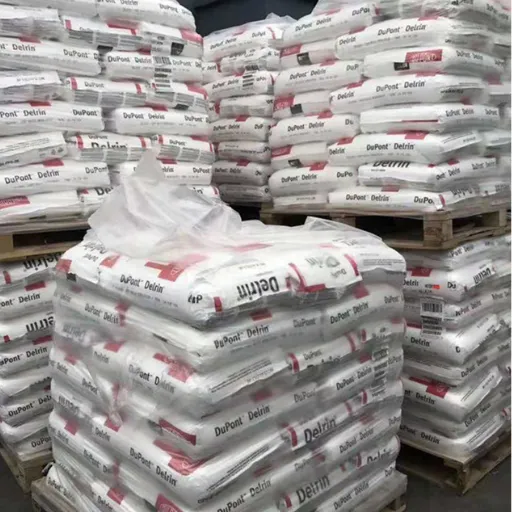
Rotational molding—commonly called rotomolding or rotocasting—is a thermoplastic manufacturing process for producing hollow, seamless parts. Unlike injection molding, which forces molten plastic into a cooled mold under high pressure, rotational molding uses biaxial rotation and moderate heat to distribute powdered resin evenly across the interior surfaces of a mold.
The process excels at producing large, complex hollow shapes with uniform wall thickness. Typical products include water and fuel storage tanks, kayaks, playground equipment, material handling bins, and agricultural containers. Wall thicknesses range from 1.5 mm to over 25 mm depending on application requirements.
Key Characteristics
Stress-free parts: No orientation or flow-induced stress because the material coats the mold without high-pressure injection
Uniform wall thickness: Even distribution produces consistent strength throughout the part
Design flexibility: Mold-in inserts, graphics, and complex shapes are achievable in a single operation
Low tooling cost: Aluminum molds cost significantly less than hardened steel injection molds
Material efficiency: Nearly all material placed in the mold becomes part of the finished product
When Marcus Lin evaluated manufacturing options for a 500-liter agricultural chemical tank in early 2025, injection molding proved prohibitively expensive due to the massive mold and machine requirements. Blow molding could not achieve the required wall thickness or threaded fitting integration. Rotational molding delivered the complex shape, 6 mm wall thickness, and molded-in mounting brackets at tooling costs one-fifth of injection molding. Six months later, his production line runs 200 tanks weekly with consistent quality.
How the Rotational Molding Process Works
Understanding the four-phase cycle helps engineers optimize parameters, troubleshoot defects, and select appropriate materials for their applications.
Phase 1: Mold Charging
Operators place a precisely weighed quantity of powdered resin—typically polyethylene—into one half of a hollow mold. The charge weight determines final wall thickness. Too little powder produces thin walls or incomplete coverage. Too much creates excess thickness, wasted material, and extended cycle times.
Molds are normally constructed from cast or fabricated aluminum, though sheet steel and electroformed nickel molds serve specialized applications. Aluminum dominates because it offers good thermal conductivity, light weight for handling, and machinability for complex geometries.
Phase 2: Heating and Coalescence
The mold closes and transfers into a heated oven, typically gas-fired and maintained at 260-370°C depending on material and part thickness. Simultaneously, the mold rotates slowly around two perpendicular axes—usually at speeds between 4 and 20 revolutions per minute.
This biaxial rotation ensures powder tumbles and distributes uniformly across all interior mold surfaces. As the mold heats, powder particles soften, stick to the hot mold wall, and fuse together into a continuous molten layer. The process relies on gravity and heat, not pressure.
Major / Minor Axis Speed Ratio: The ratio between primary and secondary rotation speeds critically affects wall thickness distribution. A 4:1 ratio is common for simple shapes, while complex parts with deep recesses may require custom ratios to prevent thin spots in corners or vertical walls.
Phase 3: Cooling and Solidification
Once all powder has melted and formed the desired wall thickness, the mold moves to a cooling station. Cooling methods include forced air, water mist, or a combination. Controlled cooling prevents warpage, dimensional instability, and residual stress.
Cooling typically takes 30-60% of total cycle time. Rapid cooling shortens cycles but can cause shrinkage marks or poor surface finish. Slow cooling improves dimensional stability but reduces throughput.
Phase 4: Demolding and Finishing
After cooling to approximately 40-80°C, operators open the mold and remove the finished part. While still warm, the plastic remains somewhat pliable, allowing minor adjustments or insert installation if needed.
Secondary operations may include trimming, drilling, machining, or surface finishing. Unlike injection molded parts, rotomolded components require no gate removal or runner system recycling.
Materials Used in Rotational Molding
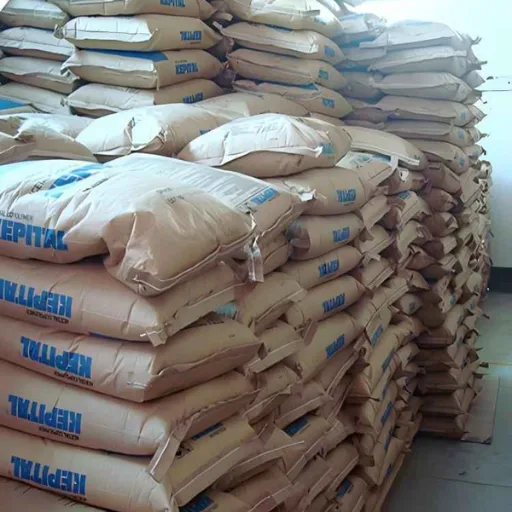
Material selection directly impacts mechanical properties, chemical resistance, UV stability, and production efficiency. Over 80% of rotational molding worldwide uses polyethylene grades, though other materials serve specialized applications.
Polyethylene (PE) Grades
Polyethylene dominates rotational molding because of its excellent powder flow, thermal stability, and broad property range.
Linear Low-Density Polyethylene (LLDPE): The most common rotational molding resin. LLDPE offers excellent environmental stress crack resistance (ESCR), good impact strength, and moderate stiffness. Melt flow index typically ranges from 3-6 g/10min for optimal powder fusion. Ideal for fuel tanks, chemical containers, and outdoor furniture.
Low-Density Polyethylene (LDPE): Softer and more flexible than LLDPE, with lower stiffness but excellent clarity and ease of processing. LDPE suits flexible products, toys, and low-stress containers.
High-Density Polyethylene (HDPE): Higher stiffness, better chemical resistance, and improved tensile strength compared to LLDPE. HDPE works well for industrial containers, trash bins, and large tanks requiring structural rigidity. Melt flow index of 3-8 g/10min supports good powder coalescence.
Cross-Linked Polyethylene (XLPE): Cross-linking during or after molding creates a thermoset-like structure within the thermoplastic matrix. XLPE delivers superior heat resistance, abrasion resistance, and chemical compatibility for demanding applications.
Polypropylene (PP)
Polypropylene offers higher stiffness, better heat resistance, and improved chemical resistance than polyethylene. However, PP requires more precise temperature control during rotational molding because its narrow processing window increases the risk of oxidation and degradation.
Recent advances in PP stabilization and rotational molding grade development have expanded PP use into automotive components, ventilation ducts, and high-temperature applications where PE would soften excessively.
Other Rotational Molding Materials
PVC (plastisol): Soft, flexible products such as balls, dolls, and marine buoys
Nylon (PA6, PA66): High mechanical strength and heat resistance for industrial and automotive applications
Polycarbonate (PC): Transparent or impact-resistant parts requiring optical clarity
ABS and EVA: Specialized applications requiring specific surface properties or flexibility
Shanghai Wenqin Plastics supplies LLDPE, HDPE, and PP grades suitable for rotational molding applications. Our technical team helps identify the optimal melt flow index, density, and additive package for your specific product requirements. [Request a technical data sheet] or [explore our PE and PP grade range] to evaluate material options for your rotomolding operation.
Advantages and Limitations of Rotational Molding
No manufacturing process suits every application. Evaluating rotational molding against your product requirements clarifies whether it represents the optimal choice.
Key Advantages
Low Mold Cost: Aluminum rotational molds typically cost 50-75% less than comparable injection molds. This makes rotomolding economical for lower production volumes and large parts where injection mold costs would be prohibitive.
Design Freedom: Complex geometries, undercuts, and molded-in features are achievable without slides or complex mold actions. Multiple parts can mold simultaneously in a single machine.
Uniform Wall Thickness: The biaxial rotation produces remarkably even wall distribution, eliminating weak points common in blow-molded parts.
No Weld Lines or Stress: Because material flows without pressure, parts exhibit no knit lines, flow marks, or orientation-induced stress. This improves durability and chemical resistance.
Material Efficiency: Rotational molding uses nearly 100% of the material charged into the mold. There are no runners, gates, or sprues to recycle.
Important Limitations
Longer Cycle Times: Typical cycles range from 15 minutes to over an hour depending on part size and thickness. High-volume production often favors faster processes.
Limited Material Selection: The powder-based process restricts material options primarily to polyethylene and select other thermoplastics.
Surface Finish Constraints: Mold surface texture transfers directly to the part, but achieving injection-mold-level gloss requires highly polished molds and optimized processing.
Dimensional Tolerances: Rotational molding produces wider tolerances than injection molding due to thermal expansion and shrinkage variations during the slow heating and cooling cycle.
The engineering team at GreenField Agriculture discovered these trade-offs firsthand when transitioning from metal tanks to plastic. Rotational molding enabled their 1,000-liter fertilizer tank with molded-in baffles and threaded fittings at viable tooling costs. However, achieving the ±1 mm dimensional tolerance on the outlet flange required mold redesign and tighter process controls. After three production trials, they locked parameters that delivered consistent parts within specification.
Common Applications and Products
Rotational molding serves diverse industries where hollow, durable plastic components deliver value.
Industrial and Agricultural
Chemical and water storage tanks (200 liters to 20,000+ liters)
Intermediate bulk containers (IBCs) and material handling bins
Agricultural sprayer tanks and livestock feeders
Septic tanks and water treatment components
Consumer and Recreation
Kayaks, canoes, and paddleboards
Playground slides and rotational-molded playground structures
Coolers and outdoor furniture
Toys and sporting goods equipment
Automotive and Transportation
Fuel tanks and DEF (diesel exhaust fluid) tanks
Tractor fenders and vehicle body panels
Air ducts and ventilation components
RV and marine water tanks
Specialty Applications
Medical simulators and training mannequins
Military equipment cases and containers
Custom housings for scientific instruments
Custom-molded props and display pieces
Rotational Molding vs. Other Plastic Manufacturing Methods
Manufacturers often compare rotational molding with injection molding, blow molding, and thermoforming when selecting a production method.
Rotational Molding vs. Injection Molding
Injection molding dominates high-volume production of small to medium-sized parts with excellent surface finish and tight tolerances. However, for hollow parts exceeding approximately 50 liters, injection molding requires split molds, core pulls, and massive clamping forces that drive tooling costs upward exponentially.
Rotational molding becomes cost-competitive for hollow parts above 20-50 liters, lower production volumes (typically under 10,000 units annually), and complex shapes requiring uniform wall thickness without weld lines.
When to choose rotational molding: Large hollow parts, low to medium volumes, complex geometries, or when mold cost must be minimized
When to choose injection molding: High volumes, tight tolerances, complex solid parts, or when rapid cycle times are essential
Rotational Molding vs. Blow Molding
Blow molding produces hollow parts faster than rotational molding, with cycle times measured in seconds rather than minutes. It dominates bottle and container production worldwide.
However, blow molding struggles with complex shapes, sharp corners, and variable wall thickness requirements. The process inherently produces a pinch-off line and potential wall thickness variation at the bottom of the part.
When to choose rotational molding: Complex shapes, consistent wall thickness, large parts, or when pinch-off lines are unacceptable
When to choose blow molding: High-volume bottle and container production, simple hollow shapes, or when cycle time is the primary constraint
Rotational Molding vs. Thermoforming
Thermoforming heats plastic sheet and forms it over a mold using vacuum or pressure. It excels at producing large, thin-walled parts such as refrigerator liners, automotive dashboards, and packaging trays.
However, thermoforming cannot produce fully enclosed hollow parts in a single operation. It also exhibits wall thinning in deep draws.
When to choose rotational molding: Fully enclosed hollow parts, thicker walls, or when uniform thickness in deep sections is required
When to choose thermoforming: Large thin-walled parts, open containers, or when starting from sheet stock is advantageous
Quality Control and Process Optimization
Consistent rotational molding requires control over material, mold, machine, and processing parameters.
Material Quality Factors
Powder Particle Size: Optimal powder for rotational molding typically falls between 150 and 500 microns. Excessive fines cause dusting, handling problems, and bubble formation. Oversized particles may not fuse completely, creating weak spots.
Melt Flow Index (MFI): Grades with MFI of 3-6 g/10min (190°C/2.16 kg) generally perform best. Too low MFI prevents complete fusion. Too high MFI causes sagging and wall thickness variation in the mold.
Dry Flow: Good powder dry flow ensures consistent mold charging and even distribution during rotation.
Thermal Stability: Polyethylene must withstand prolonged oven temperatures without oxidation or property degradation. Antioxidant packages in rotational molding grades are formulated for extended heat exposure.
Process Control Parameters
Oven Temperature: Typically 260-370°C air temperature. Higher temperatures reduce cycle time but increase oxidation risk. Lower temperatures extend cycles but improve surface appearance.
Heating Time: Determined by part thickness, material type, and oven temperature. Overheating causes degradation and warpage. Underheating produces poor fusion, low mechanical properties, and surface defects.
Cooling Rate: Controlled cooling prevents warpage while maintaining reasonable cycle times. Water mist cooling offers faster cycles than air cooling but requires careful implementation to prevent thermal shock.
Rotation Speed and Ratio: The major-to-minor axis ratio affects wall thickness distribution in complex parts. Testing and moldflow analysis optimize this ratio before production.
Common Defects and Solutions
Bubbles or Voids: Caused by trapped air, moisture in powder, or insufficient heating. Solutions include extending heating time, improving powder drying, and verifying oven temperature uniformity.
Wall Thickness Variation: Results from improper rotation speed ratio, excessive material, or mold design issues. Adjust rotation parameters and verify mold venting.
Poor Surface Finish: Caused by low mold temperature, inadequate heating, or mold surface contamination. Clean molds thoroughly and verify heating profiles.
Warpage: Caused by uneven cooling, excessive demolding temperature, or part design with large flat areas. Improve cooling uniformity and reduce demold temperature.
Conclusion
The rotational molding process offers manufacturers a uniquely capable method for producing large, hollow, stress-free plastic parts with design flexibility that pressure-based processes cannot match. While cycle times remain longer than injection or blow molding, the low tooling cost, material efficiency, and seamless construction make rotomolding the optimal choice for tanks, containers, recreational products, and industrial components across numerous industries.
Selecting the right material—whether LLDPE for chemical resistance, HDPE for structural rigidity, or PP for elevated temperature service—determines product performance as much as mold design and processing parameters. Working with a supplier that provides consistent resin quality, complete technical documentation, and material selection support streamlines qualification and production ramp-up.
Key takeaways:
Rotational molding produces hollow, seamless parts without weld lines or orientation stress
Polyethylene grades dominate, though PP and specialty materials serve demanding applications
Low mold cost makes rotomolding economical for large parts and moderate production volumes
Process optimization requires control of powder quality, rotation parameters, and heating and cooling profiles
Material selection based on MFI, density, and additive packages directly impacts finished part quality
Ready to source PE or PP grades for your rotational molding production? Shanghai Wenqin Plastics supplies LLDPE, HDPE, and PP resins with consistent lot-to-lot quality, complete technical data sheets, and export documentation for global manufacturers. [Contact our technical team] to discuss material specifications, request samples for evaluation, or [receive a tailored quotation] for your rotational molding resin requirements.
Recently Posted
-
How to Choose an Engineering Plastics Supplier That Protects Your Production Line
June 10, 2026Last March, a tier-2 automotive supplier in Stuttgart received a shipment of PA66 GF30 that looked identical to every batch before Read More
 -
How Long Does Plastic Last? A Materials Engineer's Guide to Polymer Lifespan
June 10, 2026A single polyethylene grocery bag can persist in a landfill for 500 years, yet the same material inside your refrigerator's in Read More
 -
How to Identify Plastic Type: A Practical Guide for Materials Engineers and Procurement Managers
June 10, 2026A shipment arrives at your receiving dock. The labels are damaged, the certificates of analysis are missing, and your production l Read More
 -
Which Plastics Are Food Safe? A Materials Engineer's Guide to FDA Food Contact Compliance
June 10, 2026Maria's production line ground to a halt on a Tuesday morning in March. Her injection molding facility had just shipped 50,000 Read More

Contact Us
Recommended Products
-
 POM GF-10 Glass-Fiber Reinforced Resin Pellets for Industrial GearsNegotiableMOQ: 1 Kilogram
 -
Duracon POM SW-01 Granules - High-Performance Copolymer Resin for Industrial UseNegotiableMOQ: 1000 Kilograms
-
Basel Origin PP 4160/HP500N General Purpose Injection Molding Homopolymer Polypropylene PP PelletsNegotiableMOQ: 1000 Kilograms
-
Chimei ABS Resin D-1200 for Electronic Enclosures With Flame Retardant PropertiesNegotiableMOQ: 1 Kilogram
-
HDPE Film Grade Hta-001 Injection for High Strength ToughnessNegotiableMOQ: 1 Kilogram
-
High‑Heat‑Resistant Optical‑Grade Polycarbonate PC Resin Teijin SP‑1516 for Camera Lens ManufacturingNegotiableMOQ: 1 Kilogram
-
PC Resin Covestro 1803 With High Impact Resistance for Automotive PartsNegotiableMOQ: 25 Kilograms
-
General Purpose ABS GP-22 From Ineos Ideal for Daily Consumer Goods and Common Injection PartsNegotiableMOQ: 1 Kilogram
-
Celanese DuPont Precision XGC-25 DuPont Injection Molding Plastic Products POMNegotiableMOQ: 1 Kilogram
-
High Impact ABS Plastic Granules HI-121H Industrial Raw MaterialNegotiableMOQ: 1 Kilogram

-
Sinopec PP N-T30S Virgin Wire Drawing Grade Polypropylene GranulesNegotiableMOQ: 1 Kilogram
-
POM F10-03H With High Impact Resistance for Automotive Fuel System ComponentsNegotiableMOQ: 1 Kilogram
-
General Impact Grade ABS PA 737 Fit for Mass Production Daily Plastic and Office Supply PartsNegotiableMOQ: 1 Kilogram
-
366-5 PP Resin Granules With High Impact Strength for Industrial UseNegotiableMOQ: 1 Kilogram
-
PP Granules 3009 - Flame Retardant PP Compound for Electrical Components, UL94 V-2 RatedNegotiableMOQ: 1 Kilogram
-
PC-115P Polycarbonate Resin for 3D Printing Filaments With Low WarpageNegotiableMOQ: 1 Kilogram
-
Low‑Temperature Impact PP Pellets K4750 Modified Copolymer for Automotive BumpersNegotiableMOQ: 1 Kilogram
-
Chimei ABS Resin D-2200 for Luggage and Travel Cases With High RigidityNegotiableMOQ: 1 Kilogram
-
Natural Color Delrin POM M90NAT Celanese DuPont Virgin Resin Raw MaterialNegotiableMOQ: 1 Kilogram
-
FMA016 HDPE Grade for Large-Diameter Corrugated Pipe ProductionNegotiableMOQ: 1 Kilogram